The animal welfare paradox: when doing more for animals can produce worse outcomes
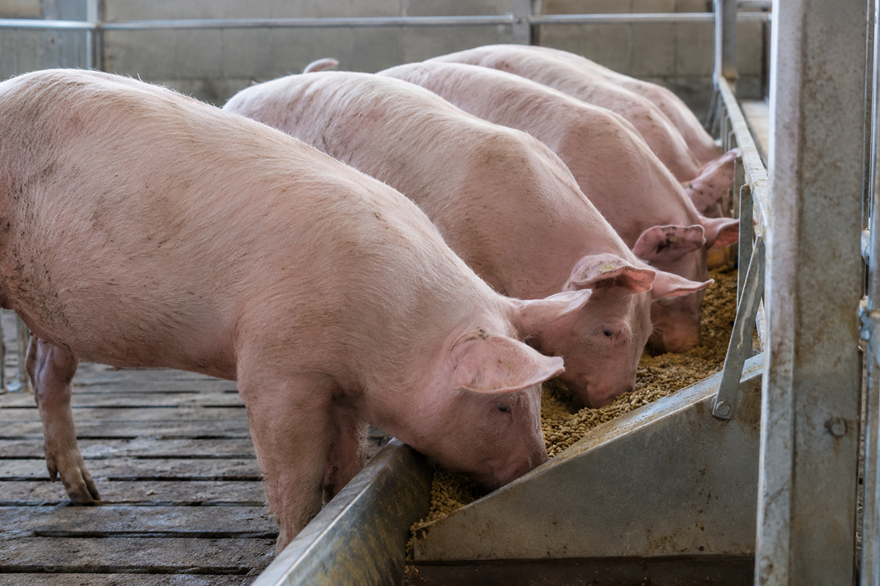
Does a regulation automatically become more animal-friendly simply because it imposes apparently better conditions? Not necessarily. The real goal should be to measure what actually happens to animals, while also considering health, mortality, biosecurity, economic sustainability and market consequences.
Animal welfare will be one of the most important issues in the next European legislative season. The European Commission has launched the revision of the rules on farmed animal welfare and, with the new EU Livestock Strategy presented on 7 July 2026, has set out a clear roadmap: targeted proposals for laying hens and broilers are expected by the end of 2026, while a revision of the rules on pigs is expected by the second quarter of 2027. The announced objectives include phasing out cages for laying hens, introducing new housing systems for pigs, and introducing practical welfare indicators at the farm level.
If science shows that certain conditions cause avoidable suffering, regulations must evolve. But science also suggests that animal welfare is complex, and changing one factor can simultaneously affect many others. This is where the so-called “animal welfare paradox” arises: a measure designed to improve welfare can, under certain conditions, produce unintended effects or even worsen some health and welfare indicators.
Changing the system is not enough: we need to look at the animals
The example of laying hens is particularly significant. EFSA recommends keeping laying hens in cage-free systems with friable litter, environmental enrichment, and elevated structures such as perches and platforms to encourage natural behaviours and opportunities for movement. At the same time, however, EFSA stresses the importance of assessing welfare through concrete indicators such as mortality, wounds, plumage damage and keel bone fractures. This means “cage-free” cannot automatically mean “better welfare” in every circumstance. A system that provides greater freedom of movement may increase opportunities for natural behaviour. Still, it also requires appropriate management, space design, litter quality, access to feed and water, control of aggression and prevention of injuries.
The same applies to broilers. EFSA indicates that reducing stocking density is an important way to improve welfare and points to negative effects associated with high densities, excessively rapid growth, inadequate litter, and locomotor problems. But the fundamental point is that welfare does not depend on a single number: it encompasses movement, resting, health, physical integrity, behaviour, environmental quality and the absence of stress. A significant example also comes from transport: a recent study conducted in Hungary found that lower broiler density, and therefore more space available per bird, was associated with increased injuries and mortality, probably as a result of greater movement and instability during transport. The right question, therefore, should not simply be: “Which system is more natural?”, but rather: “Under which system, and under which management conditions, are the animals actually better off?”
More space is not always better
Increasing the space available to animals can encourage movement and the expression of natural behaviours. At the same time, however, it can alter social dynamics, animal distribution, litter quality, ammonia concentrations, manure management, injury risk, and farmers’ ability to monitor and control the animals. A seemingly simple principle can therefore trigger a chain of effects.
The same applies to outdoor access. Using outdoor areas can provide animals with greater behavioural variety and environmental stimulation. But it can also increase exposure to predators, parasites, pathogens and wild animals. Scientific literature describes both benefits and risks that should be assessed together, not separately.
A clear example is avian influenza: contact with wild birds is a risk factor and makes strict biosecurity measures even more important on poultry farms. EFSA continues to stress the need for rigorous measures to prevent the virus from being introduced and spreading on farms. This does not mean that outdoor farming is “worse”. It means no single characteristic, considered in isolation, can serve as an automatic certificate of animal welfare.
When improving standards can shift production
New animal welfare regulations may require farmers to invest, hire more labour, and bear higher management costs. If these costs are not adequately recognised by the market, some farms may reduce production or leave the sector, particularly when competing with products from countries with different standards. This is where the risk of production relocation emerges: European demand remains, but part of that demand could potentially be met through increased imports. In this case, higher standards on European farms would not necessarily improve animal welfare throughout the global supply chain.
For this reason, new legislation should assess not only the direct effects on animals, but also the economic and commercial consequences of new rules, balancing improvements in animal welfare with the competitiveness of European production and promoting higher standards throughout international supply chains as well.
From the “better system” to the “animal that is actually better off”
This is not about choosing between animal welfare and competitiveness, nor about questioning the need to improve standards. The European Commission itself is moving in this direction when it refers to “practical on-farm welfare indicators“. EFSA has also identified several animal-based measures to assess welfare conditions in practice: mortality, wounds, plumage damage, keel bone fractures, footpad dermatitis and other parameters that can be directly observed in animals. This represents an important shift in perspective: rather than determining in advance that one housing system is always better than another, we can ask which conditions produce the best outcomes, taking into account species, genetics, climate, farm size, management, and the skills of the people working with the animals.
The upcoming revision of European animal welfare legislation therefore represents an opportunity to move forward, not simply by introducing new bans or new requirements. The real ambition should be to build an outcome-based animal welfare policy that measures what truly matters to animals and corrects unintended effects when they emerge, because animal welfare is not a competition to see who can introduce the strictest rule. It is the ability to achieve healthier animals, with less stress and fewer injuries, that are better adapted to their environment. The question, then, should not simply be “Are we doing more for animals?” It should be more demanding: “Can we demonstrate that, as a result of what we are doing, animals are actually better off?” This difference between intention and outcome will shape the future of European animal welfare policy.
1. Does stricter regulation automatically guarantee better animal welfare?
No. A regulation may improve one particular aspect of welfare while producing unintended effects on health, mortality, injuries, biosecurity or other indicators. This is why it is important to assess the overall effects on animals.
2. Why are animal-based indicators important for assessing welfare?
Because they allow direct measurement of an animal’s condition through parameters such as mortality, injuries, locomotor problems, fractures, plumage condition, and other indicators of health and behaviour, rather than automatically assuming one housing system is better.
3. What unintended consequences can new animal welfare regulations have?
Changes in stocking density, housing structures or production systems can affect animal health, biosecurity, production costs, productivity and farm competitiveness. If European production declines, part of demand could also be met through imports from countries with different standards.
4. How should European animal welfare legislation evolve?
Legislation should increasingly be based on scientific evidence and measurable indicators, assessing not only housing-system characteristics but, above all, the outcomes achieved in animal health, safety, behaviour, and welfare.