The future of European livestock farming: the CAP and the challenge of competitiveness
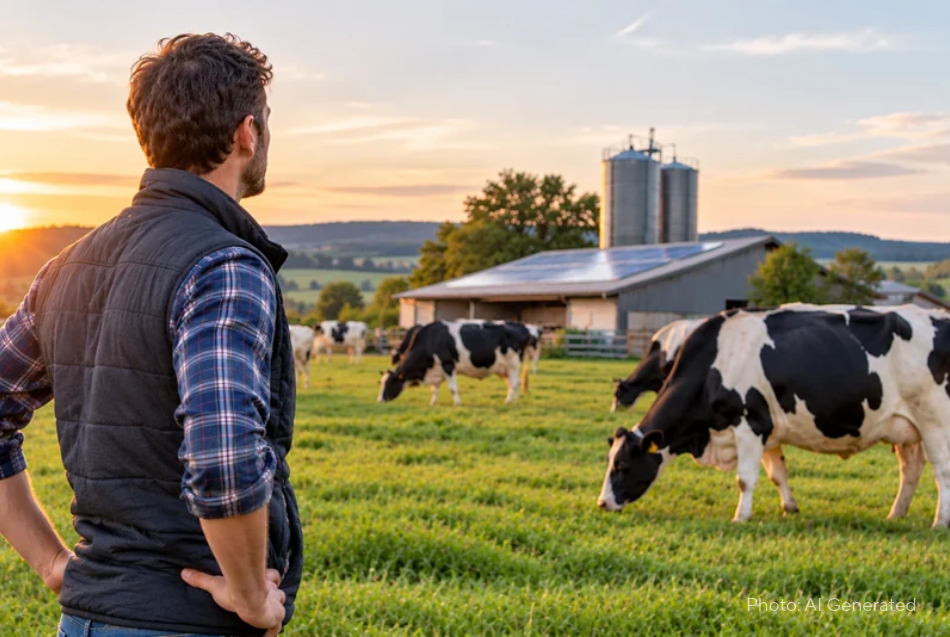
How the future Common Agricultural Policy, recent AGRIFISH discussions and the EU Livestock Strategy can support investment, competitiveness and resilience across Europe’s livestock sector.
The future of European livestock farming will depend on the sector’s ability to remain competitive while addressing increasingly complex challenges, including rising production costs, animal diseases, climate change, environmental pressures and market uncertainty. Developments in the Common Agricultural Policy (CAP), recent discussions at the AGRIFISH Council and the EU Livestock Strategy outline some of the key priorities for the years ahead. Investment, innovation, risk management and sustainability will all be important in ensuring the viability of farming businesses and the continuity of Europe’s food production.
Post-2027 CAP: supporting farmers and strengthening resilience
On 26 October 2026, the Council of the European Union approved its partial negotiating position on the regulation concerning the post-2027 CAP, which will cover the 2028–2034 period. The position aims to establish a simpler and more streamlined framework, with more targeted support and greater flexibility for Member States to address the specific needs of their farmers. Key priorities include support for active farmers, generational renewal, risk management and tools to address crises.
These developments are particularly relevant to the livestock sector. Farms need to cope with extreme weather events, market volatility, and animal disease outbreaks while maintaining economic viability. The future CAP could support this objective by funding investment in farm modernisation, digital technologies, disease prevention and biosecurity, and climate adaptation. However, the Council’s position is only partial: financial aspects and certain horizontal issues remain subject to negotiations on the EU’s next Multiannual Financial Framework for 2028–2034. The final framework has yet to be agreed.
The EU Livestock Strategy: competitiveness and sustainability
Presented by the European Commission on 7 July 2026, the EU Livestock Strategy sets out a long-term vision for strengthening the sector. It identifies five priorities: crisis preparedness, competitiveness, sustainability, recognition of the specific characteristics of different territories and farming systems, and production excellence. The livestock sector generates approximately €400 billion in annual turnover and provides around seven million jobs across the EU. At the same time, it faces challenges including tight profit margins, rising costs, changing markets and the spread of animal diseases.
The strategy aims to strengthen disease prevention and management, improve animal welfare, reduce emissions and promote more efficient resource use. Environmental protection also involves more effective nutrient management, emissions-mitigation practices, climate adaptation, and more sustainable feeding systems. In this context, the European protein plan aims to increase the share of EU-produced protein crops and oilseeds used in animal feed from 25% in 2025 to 35% by 2035.
Animal health and investment in stronger, more resilient farms
Animal health is a key component of competitiveness and production continuity. Prevention, surveillance, biosecurity and timely intervention help reduce the risk of disease outbreaks, protect animal welfare and limit the economic consequences of health crises. Investment in farm infrastructure, monitoring systems and improved management practices can help make livestock farms better prepared and more resilient. At the same time, more efficient management of water and feed resources, together with the adoption of innovative solutions, can strengthen farms’ ability to adapt to environmental and climate pressures.
Support for livestock farming must therefore address economic viability, animal health and welfare, and environmental protection together. At the AGRIFISH Council meeting on 26 October 2026, ministers also discussed developments in agrifood trade and the opportunities offered by the European Union’s trade agreements. During the first eight months of 2026, the EU agrifood sector recorded a trade surplus of €34.7 billion, up €4.1 billion from the same period in 2025. For European livestock farmers, competitiveness also depends on operating under fair and predictable market conditions while maintaining and promoting European standards in production, food safety and animal welfare.
Looking ahead: competitive and sustainable livestock farming
The future CAP and the EU Livestock Strategy will play an important role in supporting farms through the sector’s ongoing transformation and strengthening its long-term competitiveness. Translating policy objectives into practical measures and investment opportunities will be essential to encourage farm modernisation, technological innovation and the adoption of more efficient production practices. The economic viability of farming businesses must therefore go hand in hand with protecting animal health and welfare and reducing the environmental impact of production.
These priorities are also connected to the One Health approach, which recognises the close interdependence between human health, animal health and the environment. Ahead of One Health Day on 3 November, it is worth highlighting that disease prevention, stronger on-farm biosecurity and ecosystem protection are not separate objectives, but interconnected elements of a broader sustainability strategy. Investing in healthier, more efficient and resilient livestock farms therefore contributes not only to the viability of agricultural businesses, but also to food security and the vitality of rural communities across Europe. The challenge for European livestock farming will be to strike a lasting balance between competitiveness, animal welfare, environmental responsibility and production resilience.
1. What are the main objectives of the post-2027 CAP?
The future CAP aims to simplify the support system, better target resources, strengthen risk and crisis management, and support active farmers and generational renewal. The final framework is still under negotiation.
2. How can the CAP support European livestock farmers?
The CAP can encourage investment in farm modernisation, biosecurity, disease prevention, digital technologies and climate adaptation, helping to improve the competitiveness and resilience of livestock businesses.
3. What is the EU Livestock Strategy?
Presented by the European Commission in July 2026, the strategy aims to strengthen the sector over the long term. It is based on five priorities: crisis preparedness, competitiveness, sustainability, recognition of territorial specificities and production excellence.
4. How is livestock farming connected to the One Health approach?
The One Health approach recognises the links between human health, animal health and the environment. In livestock farming, disease prevention, biosecurity, animal welfare, and sustainable farm management all help protect these interconnected areas.