FAO assessment: livestock's contribution to sustainable agrifood systems goes far beyond production
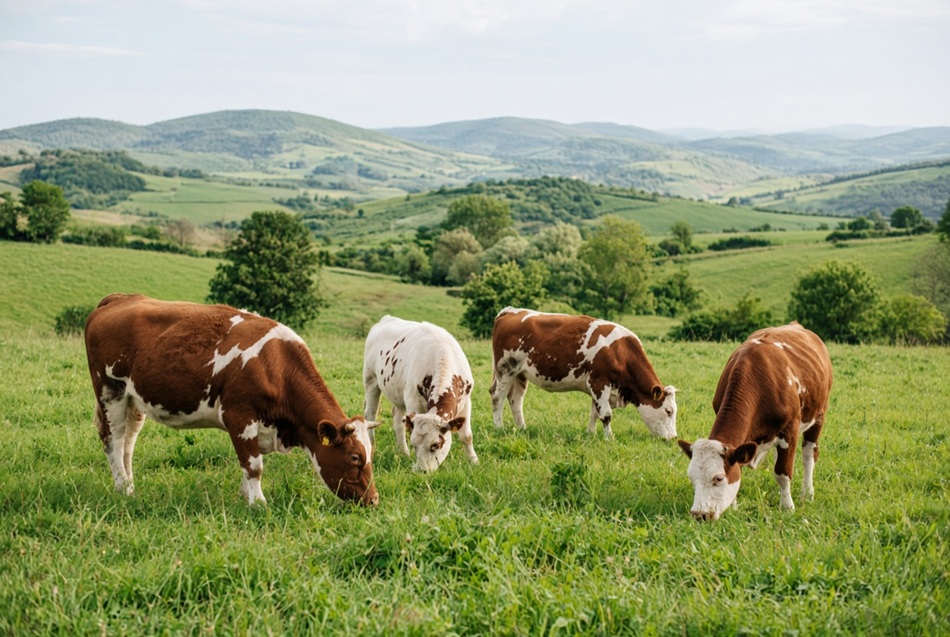
FAO highlights livestock’s contribution to food security, livelihoods, resilience and the circular bioeconomy. No single production system is universally sustainable: benefits and trade-offs depend on local context. Sustainability must therefore consider emissions, biodiversity, water, soil, health and socioeconomic factors together.
Livestock farming is often discussed through a single lens, particularly its environmental footprint. A new FAO assessment takes a broader view, examining how different livestock production systems contribute to food security, livelihoods, economic development, environmental sustainability, resilience and the circular bioeconomy, while also highlighting their constraints and trade-offs. The report, “Contribution of the livestock sector to food security and sustainable agrifood systems. Benefits, constraints, synergies and trade-offs“, underlines a key message. No one-size-fits-all model exists for sustainable livestock production. Each system’s contribution depends heavily on its environmental, economic, social, and cultural context.
Livestock and food security
Livestock plays an important role in global food security. According to the FAO assessment, livestock production systems contribute around 34% of the protein supply for human nutrition. At the same time, significant regional differences in protein availability persist. Livestock matters beyond the food it provides. Globally, around half of the people living in extreme poverty depend on livestock, particularly in sub-Saharan Africa and Southern Asia. For many households, animals provide food, income, savings and a form of financial resilience. The sector also has a major economic dimension. Livestock contributes an estimated 40% of global agricultural GDP, equivalent to around USD 1.8 trillion. Its role in generating income, supporting rural economies and contributing to public revenues therefore forms an important part of the food-system equation.
Different systems, different contributions
The FAO assessment considers the wide diversity of livestock production systems worldwide, from low-external-input pastoral systems to highly productive systems relying more heavily on external inputs, as well as mixed crop-livestock systems. Their contributions to sustainability differ. Mixed crop-livestock systems can generate synergies between crop and animal production. Farmers can use crop residues as feed, while manure returns nutrients to agricultural soils. Grassland-based systems can make important contributions to environmental and social sustainability, resilience and the circular use of resources, particularly where grazing is well adapted to local conditions. At the same time, high-external-input systems can contribute more to economic performance and achieve lower environmental impacts per unit of product through higher productivity and efficiency. These differences illustrate why comparisons between livestock systems need to consider more than a single indicator. A system may perform strongly in one dimension while facing greater constraints in another.
Sustainability goes beyond greenhouse gas emissions
The environmental dimension remains important. Globally, livestock systems account for around 12% of anthropogenic greenhouse gas emissions, with methane representing the largest share of livestock-related emissions. Yet the FAO stresses that sustainability cannot be reduced to greenhouse gases alone. Livestock systems also interact with water resources, soils, biodiversity, air quality and ecosystems. The effects depend strongly on management and local conditions. Well-managed grazing can support pasture health, while excessive stocking rates can increase erosion and nutrient losses. Feed production also strongly determines water use, particularly where irrigation is required. The evidence on soil carbon and other environmental outcomes is similarly context-dependent. This makes integrated assessments essential: productivity, soil health, carbon storage, water quality, biodiversity and emissions need to be considered together rather than in isolation.
Health, resilience and changing conditions
Sustainable food systems also depend on healthy animals and people. The report highlights the complex interactions between livestock, humans and the environment, including disease transmission and antimicrobial use. Addressing these challenges requires cross-sector and cross-disciplinary cooperation, in line with the One Health approach. Resilience is another central element. Climate change can affect feed availability, animal health and welfare, household income and, ultimately, food security. Smaller and poorer producers can be particularly vulnerable. The FAO identifies several ways to strengthen resilience, including better grassland management, diversifying agricultural activities and income, integrating crops and livestock, maintaining locally adapted breeds, and using local knowledge and social networks.
Livestock and the circular bioeconomy
Livestock can also help make better use of biological resources. Animals can convert biomass unsuitable for direct human consumption into food. In integrated systems, manure and other animal by-products can, in turn, contribute to soil fertility, bioenergy, or biomaterials. This circular dimension is particularly relevant when livestock is considered as part of the wider food system rather than as a separate activity. Reducing losses and using available resources more effectively can create synergies between agricultural production, resource efficiency, and environmental management.
The report also considers losses along livestock supply chains. These can occur at different stages of production and distribution and, in low-income production systems, losses due to animal mortality can be particularly significant. Reducing these losses can therefore improve overall system efficiency and make better use of the resources already invested.
Better evidence and policies adapted to context
One of the report’s important conclusions concerns the limits of current knowledge. Comparable data on the distribution and performance of livestock systems remain incomplete, and no internationally agreed classification covers all production systems. Evidence is also unevenly distributed geographically and across sustainability dimensions. These gaps matter for policymaking. The FAO assessment finds that existing legislation and policy frameworks often focus on production, animal and human health, antimicrobial resistance and food safety. In contrast, other areas, including climate adaptation and mitigation, biodiversity, food security and nutrition, are less consistently addressed. This does not mean livestock systems should follow a single global pathway. Rather, national and local strategies need to consider the specific benefits, constraints, synergies and trade-offs associated with each system.
The FAO assessment ultimately points towards a more comprehensive way of discussing livestock sustainability. The question is not simply whether livestock production should increase or decrease, but how different production systems function, what they contribute, what challenges they face and how they can be improved in their specific contexts.
What does livestock contribute to global food security?
Livestock production systems contribute around 34% of the protein supply for human nutrition. Livestock also provides food, income, and financial resilience for millions of households, especially people living in extreme poverty in sub-Saharan Africa and Southern Asia.
Is there one livestock production system that is sustainable everywhere?
No. The FAO assessment finds no one-size-fits-all approach. Mixed, grassland-based, and high-external-input systems can contribute differently to economic, social, and environmental sustainability depending on local agroecological and socioeconomic conditions.
What are the main environmental issues associated with livestock?
The report considers greenhouse gas emissions alongside water use, soil health, biodiversity, air quality and ecosystem impacts. The scale and nature of these effects vary considerably by production system, management practices, and local conditions.
Why does the FAO say livestock sustainability requires a contextual approach?
Because livestock systems differ greatly around the world, and data and comparable evidence remain incomplete, sustainable strategies must account for each system’s specific benefits, constraints, synergies, and trade-offs, rather than applying the same solution everywhere.