Diversifying protein sources risks overlooking the value of European livestock farming
When discussing “sustainable diets“, it is increasingly common to hear recommendations to reduce the consumption of animal-source foods and increase the intake of plant-based or next-generation proteins. This perspective is also reflected in a recent report by the European Environment Agency (EEA), which suggests that diversifying protein sources could improve the sustainability, resilience, and food security of Europe’s food system. The risk, however, is that the debate becomes reduced to a simple opposition between animal and alternative proteins, overlooking the fundamental role that livestock farming continues to play in nutritional, environmental, economic, and social terms.
Proteins are not all the same
Proteins are often treated as interchangeable. In reality, the nutritional value of foods depends not only on the quantity of protein they contain but also on protein quality, digestibility, the presence of essential nutrients, and their metabolic effects. Meat, milk, dairy products, and eggs provide high-quality proteins containing all essential amino acids in proportions ideally suited to human requirements. They also supply nutrients that are difficult to obtain in comparable amounts and bioavailable forms from plant foods, including vitamin B12, heme iron, highly absorbable zinc, and certain essential fatty acids. Recent studies have also shown that proteins can have different physiological effects after being metabolised by the body. For this reason, evaluating food systems solely in terms of grams of protein risks providing an incomplete picture of reality and may increase the risk of nutritional deficiencies within the population.
Livestock are not the main source of greenhouse gas emissions
The EEA report highlights the contribution of livestock farming to agricultural greenhouse gas(GHG) emissions. However, emissions represent only one indicator of sustainability, and livestock production is not the primary source of overall GHG emissions in the European Union. According to data from the EEA itself, in 2022, energy production accounted for 27.4% of EU GHG emissions, transport for 23.8%, industry for 20.3%, and residential and commercial activities for 11.9%, while the entire agricultural sector, of which livestock farming represents only a portion, accounted for 10.8% of total emissions.
More than 80% of European emissions originate from sectors heavily dependent on fossil fuels. Moreover, a significant share of livestock emissions consists of biogenic methane, which is part of a relatively short carbon cycle. Unlike fossil CO₂, which can persist in the atmosphere for centuries or even millennia, enteric methane remains in the atmosphere for around 12 years before being broken down. For this reason, assessing climate impacts requires considering not only the quantity of emissions, but also their origin and atmospheric lifetime.
Animals support landscapes, biodiversity and rural land management
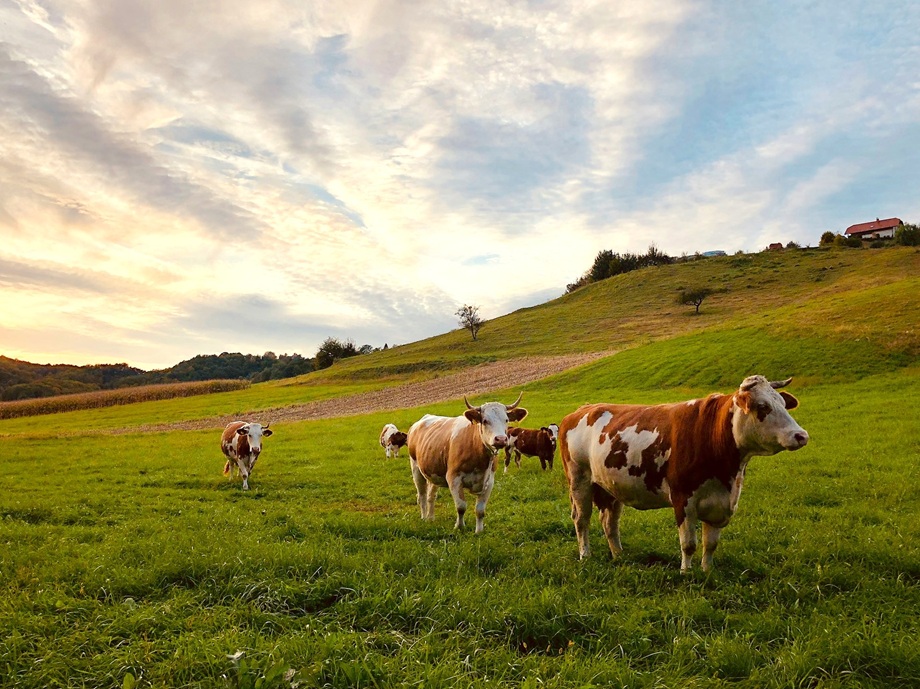
Livestock farming contributes to soil fertility through nutrient recycling, supports landscape management, and helps maintain land that would otherwise be unavailable for direct food production. Across Europe, millions of hectares of permanent grasslands are unsuitable for growing cereals or legumes intended for human consumption. Grazing animals play a key role in preserving these areas, preventing land abandonment and maintaining open landscapes. Furthermore, numerous habitats of conservation value depend on grazing activities. The EEA report itself acknowledges that approximately one-third of Europe’s protected habitats require grazing practices for their preservation.
The soy dependency narrative does not tell the whole story
One of the most frequently debated issues concerns imports of soybeans from South America to feed livestock. In reality, a substantial portion of animal feed consists of grass and forage, as well as by-products and co-products from the food and agro-industrial sectors, including cereal bran, sugar beet pulp, oilseed meals, starch-processing residues, brewing and distilling by-products, whey, and other materials not suitable for direct human consumption.
According to the FAO, approximately 86% of livestock feed consumed globally is not edible by humans. Livestock play an important role in converting non-edible biomass into high-quality food while recovering and upgrading resources that would otherwise remain underutilised. Moreover, European production of protein crops has increased significantly in recent years, driven by the development of domestic supply chains for soybeans, field peas, faba beans, and other legumes. Achieving greater protein self-sufficiency depends not only on reducing livestock production but also on improving European farming systems and agricultural productivity.
Alternative proteins are not without challenges
Plant-based proteins and emerging food technologies can undoubtedly help broaden consumer choice. However, presenting them as a simple and immediate solution risks overlooking several important challenges. Many plant-based products are highly processed and require complex industrial manufacturing, globally sourced ingredients, and extensive formulation processes that may be far removed from the concept of “natural food” often promoted in marketing campaigns. Even greater uncertainties surround lab-grown meat, precision fermentation, and proteins derived from microbial biomass. These technologies remain at an early stage of development, production costs are still high, and comprehensive assessments of their large-scale environmental impacts are not yet available, making it difficult to consider them a fully proven solution for Europe’s future food security.
Sustainability also means supporting rural communities
European livestock farming produces far more than food. It supports millions of jobs, helps sustain often fragile rural areas, and contributes to the preservation of traditional practices, landscapes, and regional products. Many mountainous and hilly regions have few realistic economic alternatives to livestock farming. A significant reduction in livestock activities could have major social and economic consequences, accelerating the rural depopulation and land abandonment already occurring in many areas. Sustainability should therefore be evaluated through an integrated approach that considers environmental, economic, and social dimensions simultaneously.
The real challenge: raising animals better, not raising fewer animals
Rather than framing animal and alternative proteins as competing options, Europe’s real challenge should be to improve the efficiency and sustainability of livestock production continuously. Genetic innovation, precision feeding, emission reduction strategies, by-product valorisation, animal welfare improvements, and sustainable pasture management all offer practical tools for reducing environmental impacts while preservingthe nutritional and economic benefits of animal agriculture.
Diversifying protein sources can certainly be part of Europe’s food future. However, that future should not be built on replacing livestock farming, but on integrating it into a more efficient, balanced, and resilient food system because sustainability is not about choosing between plant and animal proteins. It is about recognising and maximising the contribution that each can make within a varied diet and a truly sustainable agricultural system.