European livestock farming: a strategic resource to be enhanced
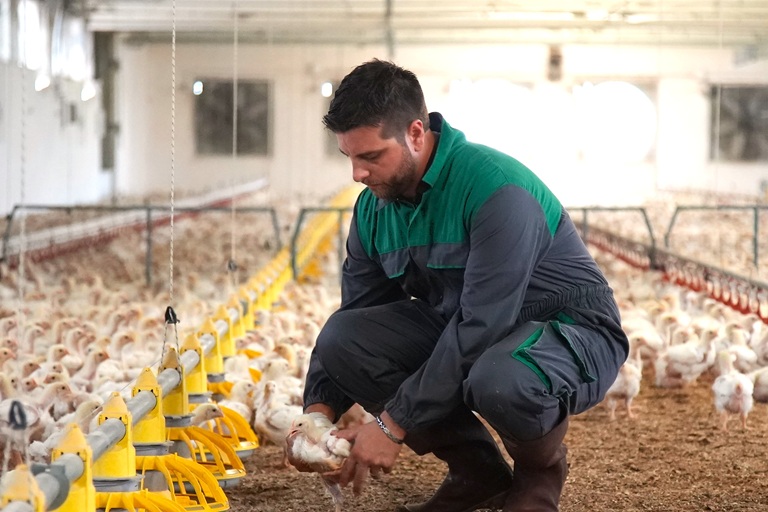
European livestock farming: a strategic resource to be enhanced
Environmental goals, food security needs and economic sustainability increasingly shape the future of livestock farming in Europe. In this context, the document “Strategy for the Future of Livestock Farming in Europe” by Farm Europe offers a more nuanced vision, grounded in solid statistics: European livestock farming is not a problem to be downsized, but a strategic resource that should be strengthened, for consumers, for the planet and for the economy.
Livestock farming as a pillar of European agriculture
Economically, the livestock sector represents one of the main pillars of European agriculture. According to Eurostat data for 2023, livestock production in the European Union reached €214 billion. This means that around 40% of total agricultural output comes from livestock farming, while crop production accounts for 51% and other activities for the remaining 9%. It is therefore far from a marginal sector; it is one of the structural foundations of the agri‑food system.
Animal‑based products also play a key role in terms of quality and territorial identity: nearly 20% of all European PDO and PGI labels concern livestock products, with cheeses accounting for 37% of these certifications and meat products accounting for 54%. Despite this importance, the sector is experiencing a deep structural crisis. Over the past fifteen years, the number of farms has fallen by about 45%, accompanied by a decline in livestock numbers and increasing economic pressure. This is compounded by a growing generational renewal problem, which threatens the continuity of production, especially in rural and mountain areas where livestock farming is often the only viable economic activity.
European consumption in line with nutritional recommendations
When looking at consumption trends, Europe shows a very different picture from the global one. Projections indicate that by 2050, per‑capita consumption of animal products in Europe will remain essentially stable at around 88 kg per person per year, with only a slight decrease of 0.8 kg compared to current levels. Globally, however, demand is expected to rise significantly, reaching 69 kg per capita per year, an increase of 23%, or about 14.7 kg more than today. This divergence shows that Europe is already in a mature consumption phase, aligned with nutritional recommendations.
Long‑term trends also reveal notable shifts among different types of meat. Between 1960 and 2019, poultry consumption increased by 13 kg per capita, reaching 16 kg per capita, while pork consumption grew by 7.5 kg, reaching 16 kg per capita. Fish consumption rose by 7 kg, reaching about 12 kg per capita. Beef consumption, on the other hand, declined slightly by 0.5 kg overall, stabilising around 9 kg per year, but with a much sharper drop, around 30%, since the late 1990s. Sheep and goat meat consumption remains low, at around 2 kg per capita, with a marginal decrease of 0.1 kg.
From a nutritional perspective, the document highlights that animal‑based foods continue to play an important role in the human diet, providing high‑quality proteins and essential micronutrients such as iron, zinc and vitamins. European guidelines recommend, for example, a maximum of 500 grams of cooked red meat per week (equivalent to 750 grams raw), emphasising the need for balance rather than elimination, since meat‑free diets require careful planning to avoid deficiencies.
Permanent grasslands: essential ecological infrastructures
Livestock farming in Europe is deeply connected to the land, as 34% of the agricultural area comprises permanent grasslands, ecosystems that provide environmental stability and support agricultural production. Despite their importance, since 1990 the European Union has lost around 10 million hectares of agricultural land, of which 5 million were permanent pastures and grasslands. This decline is not just a change in the rural landscape; it also directly affects Europe’s ability to maintain sustainable, resilient production systems.
Permanent grasslands play a crucial ecological role: they store carbon in the soil in a stable and long‑lasting way, host rich biodiversity, protect the soil from erosion and regulate water cycles. They are also an integral part of the “farming landscapes” that define many European regions. Their disappearance is therefore not a simple agricultural loss, but a structural weakening of rural ecosystems. From a climate perspective, their contribution is particularly significant. Tropical forests are among the world’s largest natural carbon reservoirs, storing about 240 tonnes of CO₂ equivalent per hectare. Still, European permanent grasslands also retain substantial amounts, between 130 and 160 tonnes per hectare when considering both biomass and soil. For this reason, the loss of pastures becomes a source of emissions, while their conservation is an immediate and low‑cost mitigation measure. Maintaining extensive livestock systems means preserving one of the continent’s most important carbon sinks and protecting a natural infrastructure that directly supports climate action.
European livestock farming is among the most efficient in the world
The efficiency of European livestock farming is often underestimated, yet the data tell a different story. The EU sector is among the best performers globally in terms of emissions per kilogram of protein produced, thanks to high environmental standards, genetic improvement and advanced livestock practices. Another key factor reinforces this efficiency: 88% of the feed used is not suitable for human consumption. It consists mainly of fibrous forages, agricultural residues and by‑products from the food industry, materials that would otherwise be discarded. Livestock farming transforms them into high‑value foods, demonstrating its central role in the circular economy.
This means that European animal production does not compete with human diets for resources; instead, it adds value to materials that would otherwise be wasted, contributing to the bioeconomy. The EU also stands out for having some of the lowest emission intensities in the world. This is made possible by high yields, efficient nutrient management, mixed crop‑livestock systems and the presence of permanent grasslands that offset part of the emissions by storing CO₂. Reducing European production and replacing it with imports from countries with weaker regulations would only increase global emissions and put additional pressure on fragile ecosystems such as tropical forests.
Emission leakage: emissions don’t decrease; they move elsewhere
One of the central environmental concerns is the risk of “emission leakage.” This occurs when a country reduces its own production for environmental reasons but continues to consume the same products by importing them from regions with far less stringent rules. On paper, European emissions appear to decrease, but in reality, they are shifted elsewhere, often to countries with much higher climate impacts.
In livestock farming, this mechanism is particularly evident. If Europe reduces its production of meat or milk, demand does not fall; it is met by regions where deforestation is more widespread, and production efficiency is lower. Replacing European production with imports from countries with weaker standards can therefore increase both emissions and biodiversity loss. In practice, this risks producing the opposite effect of what is intended: Europe may look “greener” in statistics, but the planet as a whole becomes worse off.
Concrete commitment against antimicrobial resistance
In recent years, the European Union has made significant progress in health, particularly in the responsible use of antibiotics. Since 2011, sales of veterinary antimicrobials have decreased by 53%, reflecting a structural shift in livestock management practices. Some categories show even sharper reductions: the use of third‑ and fourth‑generation cephalosporins has fallen by 49%, while polymyxins, a particularly critical class, have seen a dramatic 91% drop. These figures demonstrate a concrete commitment to combating antimicrobial resistance, one of the major global health challenges.
These advances are part of one of the world’s strictest regulatory frameworks. The EU bans the use of hormones and antibiotics as growth promoters and enforces high standards of traceability and food safety. However, imported products do not always comply with the same rules, which is why many stakeholders call for full “reciprocity” of standards, ensuring that anything entering the European market meets the same quality and consumer protection requirements.
Farm Europe’s strategic proposals
Farm Europe presents a vision in which European livestock farming, despite facing structural difficulties, remains a strategic sector for the continent’s future. It is seen as a pillar of food sovereignty, a driver of rural economies and a key player in the ecological transition, provided it is supported by appropriate policies. The real risk is not livestock farming itself, but its gradual decline.
The future of the sector depends on combining innovation, sustainability and competitiveness while preserving strong ties to local territories and Europe’s food traditions. Farm Europe calls for rebuilding production, enhancing livestock’s environmental benefits, and investing in technology, genetics and automation, while reducing bureaucracy and promoting quality schemes. Bioeconomy is also key, through biogas, natural fertilisers and by-product valorisation. It proposes a high-level EU group to define a five-year roadmap.
The strategy rests on three pillars: strengthening economic resilience, improving sustainability and innovation, and ensuring stable governance that protects designations and regulates synthetic products. European livestock farming should be revitalised, not reduced: with proper support, it can deliver quality food, aid the ecological transition and strengthen Europe’s sovereignty.