European agriculture: when the problem is no longer finding funding, but obtaining permits
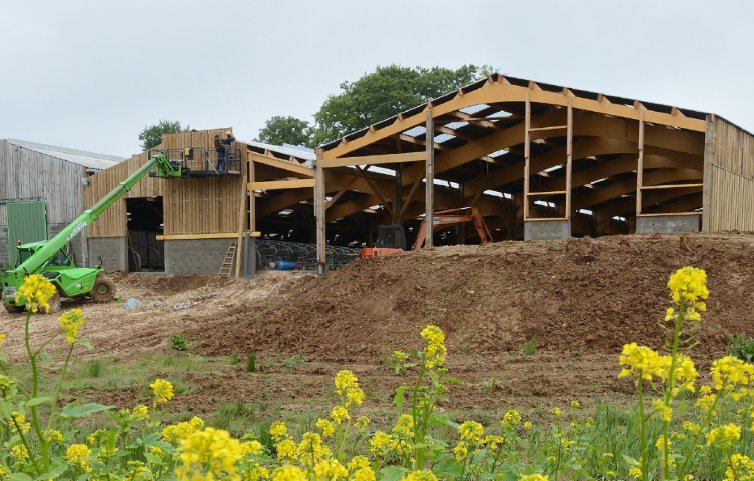
In recent years, the European debate on agriculture has focused primarily on environmental sustainability, emissions reduction, biodiversity protection, and the resilience of food supply chains. These objectives are both legitimate and now central to the European Union’s strategic agenda. Yet alongside these priorities, another issue is emerging, less visible but increasingly decisive: farmers’ ability to obtain the permits and authorisations needed to invest, innovate, and develop their businesses.
The question now being asked across many European capitals is a simple one: how can agriculture become more sustainable, modern, and competitive if building a new livestock facility, installing a biogas plant, constructing agricultural infrastructure, or expanding an existing farm requires years of procedures, permits, and often legal disputes?
Permitting has become a strategic issue
For a long time, permits and authorisations were regarded as a purely technical or administrative matter. Today, however, they have become a key factor influencing the investment capacity of the European agricultural sector.
According to a strategic report published in May 2026 by the French think tank Les Z’Homnivores, authored by environmental law expert Carole Hernandez-Zakine, a growing “judicialisation” of public decision-making is underway, particularly in the agricultural and agri-food sectors. The increasing complexity of authorisation procedures, combined with the multiplication of administrative and judicial appeals, is affecting the ability of agricultural businesses to invest and grow.
In other words, projects that have already received public authority approval are increasingly being challenged in court on procedural grounds, environmental assessments, building permits, or concerns about their impact on local communities and ecosystems. This phenomenon is not limited to France. Across Europe, a growing number of agricultural projects face lengthy authorisation procedures and are subsequently exposed to legal challenges that can delay implementation for years.
Every authorisation has become a potential battleground
According to the analysis conducted by Les Z’Homnivores, legal appeals now affect a wide range of activities: livestock farms, renewable energy installations, water management projects, plant protection products, and agricultural infrastructure. As a result, virtually every administrative authorisation is at risk of litigation.
The report highlights how the complexity of environmental law makes many projects vulnerable to procedural challenges. This does not necessarily mean that a project is environmentally unsustainable. Rather, the extensive documentation requirements, environmental impact assessments, public consultations, and compliance checks create numerous opportunities for legal objections.
The issue, therefore, is not only about complying with environmental regulations but also about ensuring predictability in decision-making. An agricultural entrepreneur may obtain all the required permits and still find a project delayed for years by subsequent appeals.
Sustainability requires investment
The paradox is clear. The same European policies that call on agriculture to reduce its environmental footprint also require substantial investment in new technologies, more efficient infrastructure, and innovative production systems.
Examples include biogas and biomethane plants, livestock waste treatment systems, water-saving technologies, farm digitalisation, and new solutions to improve animal welfare. All these innovations require permits, construction approvals, and environmental assessments. If these processes become excessively lengthy or unpredictable, the risk is that the very ecological transition that European institutions seek to accelerate will be slowed.
Competitiveness and food sovereignty also depend on simplification
In recent years, Europe has rediscovered the strategic importance of food security. Geopolitical crises, trade tensions, and the effects of climate change have highlighted the need to maintain strong domestic production capacity. In this context, the issue of permits extends far beyond bureaucracy. It becomes a matter of economic competitiveness and food sovereignty.
The report points out that legal uncertainty, longer timelines, and litigation costs may discourage new investments, farm expansions, and generational renewal within the sector. The challenge is not to weaken environmental protections, but rather to find a balance between safeguarding the environment and ensuring that projects considered beneficial to society can actually be implemented.
The discussion now emerging in Brussels revolves around a crucial question: which environmental simplifications could encourage agricultural investment without compromising ecological objectives? The goal does not appear to be the removal of controls or environmental assessments, but rather making procedures clearer, faster, and more predictable. Farmers need a system that allows them to know, within a reasonable timeframe, whether a project can proceed, and which granted permits provide greater legal certainty. And this balance between competitiveness, sustainability, and legal certainty is expected to shape the European debate in the coming months.