How the new CAP can revive European livestock farming
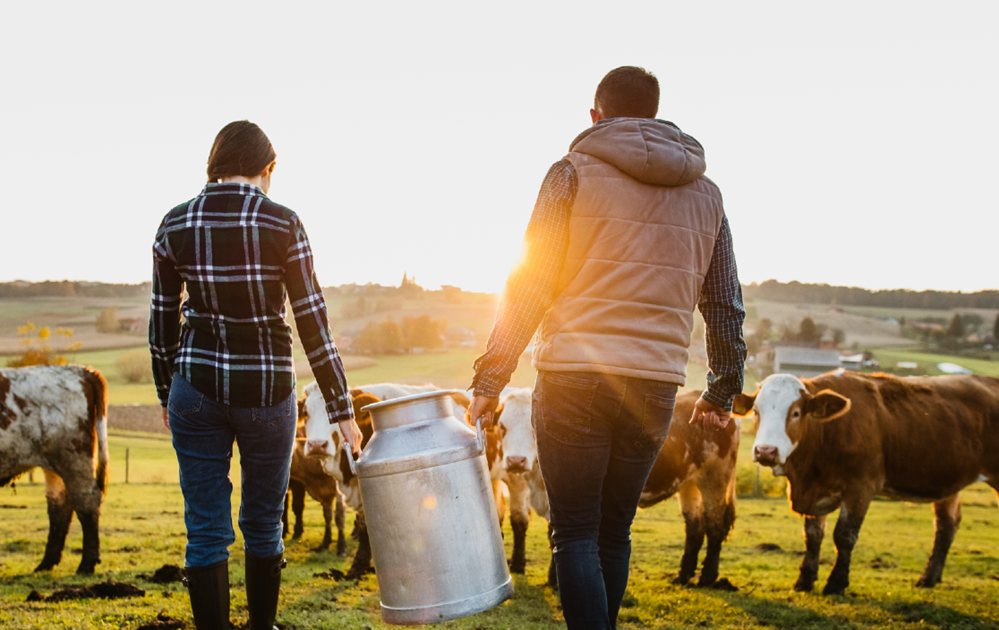
The new CAP must provide economic support to farmers and recognise the diversity of European territories, while avoiding bureaucracy and measures that could undermine the sector’s competitiveness.
European livestock farming is going through a challenging period. High production costs, market volatility, international competition, climate change, health risks, and growing regulatory complexity are pressuring farm profitability. At the same time, the sector is being asked to ensure food security, environmental sustainability, animal welfare and the vitality of rural areas. In this context, the new Common Agricultural Policy (CAP) can be a decisive tool for revitalising the sector. But to do so, it must start from one essential condition: without economically sound farms, there can be no competitive and sustainable European livestock sector.
Farmers’ income remains the top priority
CAP direct payments remain an important component of the economic stability of agricultural holdings. Their role is not simply to compensate for market difficulties, but also to create the conditions for planning investments and addressing the sector’s transformation. For livestock farmers, sustainability and innovation require resources. Modernising a livestock facility, improving energy efficiency, introducing digital systems to monitor animals or making manure management more efficient all require significant investment.
Investing in livestock farms means investing in sustainability
The transformation of livestock farming cannot be achieved through new obligations alone. A modern livestock facility can reduce consumption while improving animal and working conditions. More efficient feeding systems can reduce waste. Better manure management makes it possible to recover nutrients and limit losses. Digitalisation allows farmers to monitor animal health and productivity more effectively.
For this reason, CAP instruments dedicated to investment and rural development must remain adequately funded and easily accessible. Sustainability cannot simply be an objective imposed from above: it must become an economically viable pathway for agricultural businesses.
One CAP, but not one single livestock farming model, a delicate equilibrium to find
Another fundamental principle concerns the diversity of European livestock farming. The European Union encompasses highly technological systems, extensive farms, family holdings, organic production, pastoral systems and farming realities closely linked to local territorial characteristics. A mountain farm does not have the same needs as a specialised lowland holding. In remote and mountainous areas, livestock farming can also be one of the few economic activities that keeps grasslands and pastures productive while providing employment and maintaining people’s presence in the territory.
The future CAP will therefore have to combine common European objectives with instruments flexible enough to adapt to different regional realities. At the same time, the excessive nationalisation of rules and financial support could lead to both incoherences and distortion of competition between Member States. The future CAP will therefore need to strike this delicate balance. From a financial point of view, the Commission’s proposal to leave Member States the decision to go beyond the ringfenced budget for agriculture and to dedicate additional EU funding entails serious risk to the preservation of the EU market. Sufficient funding should be ringfenced for agriculture, and it should not depend on individual Member States’ decisions.
Sustainability yes, but without more bureaucracy
The transition must be accompanied by genuine simplification. One risk to avoid is turning every new environmental objective into an additional administrative requirement. Farmers should instead be encouraged to achieve measurable results: greater efficiency in resource use, lower emissions per unit of product, better nutrient management, improved use of pastures, and higher standards of animal welfare.
The approach should increasingly reward results rather than multiply obligations. Sustainability must also be considered in all three dimensions: environmental, economic, and social. A livestock farm that does not generate sufficient income cannot continue investing and is unlikely to guarantee the same environmental and territorial benefits over time.
Strengthening the supply chain and protecting European competitiveness
However, the CAP cannot solve all the problems facing livestock farming on its own. Farmers’ position in the supply chain must be strengthened, ensuring that the value consumers place on European products also reaches producers. At the same time, Europe must address international competition. If European farmers must comply with high standards for environmental protection, food safety, and animal welfare, imports should not be allowed to compete based on significantly different production conditions. The new CAP will therefore need to be accompanied by coherent trade policies and instruments that can enhance the quality and standards of European production.
What mistakes should be avoided?
The main mistake would be to consider livestock farming solely as an environmental problem, ignoring its role in food security, the rural economy and land management. It would be equally risky to introduce new obligations without financing the investments needed to meet them, or to increase bureaucracy. Finally, sustainability cannot be achieved without profitability. The new CAP must allow livestock farmers to invest in the future, rather than survive in the present.
The challenge is therefore to build an agricultural policy that brings together income, investment, innovation, sustainability, and territorial development. Only in this way can European livestock farming continue contributing to food security and the vitality of rural areas, while addressing the environmental and competitive challenges of the coming years.
It is precisely these issues that will be at the heart of the event “How can the new CAP revive the livestock sector in the EU, and what mistakes should be avoided?“, organised by the Sustainable Livestock Intergroup, taking place on 8 October from 10:00 to 11:30 in Strasbourg, with the participation of representatives from the European institutions, the agricultural sector, academia and regional authorities.
- How can the new CAP revive European livestock farming?
Through a combination of income support, investment funding, sustainability incentives and tools suited to different territorial realities. The objective should be to strengthen farmers’ ability to produce, invest and innovate.
- Why are investments essential for livestock farms?
Because they make it possible to modernise facilities, improve animal welfare, reduce consumption, increase efficiency and address the environmental transition. Without adequate funding, many farms would not have the financial capacity to carry out these improvements.
- What mistakes should the future CAP avoid?
It should avoid excessive bureaucracy, new obligations without adequate funding, uniform criteria across different territories, funding disparities, and policies that overlook farm profitability. Sustainability must be economically achievable.
- Why is livestock farming important for Europe’s rural areas?
Because it maintains economic activity and employment and, particularly in mountainous and remote areas, helps manage grasslands and pastures and sustain communities in the territory. Supporting livestock farms therefore also means supporting the vitality of rural communities.