Wool and Leather: what role can these materials play in the bioeconomy and sustainability?
When discussing environmental impact mitigation, the debate often focuses on reducing emissions and progressively replacing fossil-based raw materials. However, true sustainability also depends on the ability to intelligently valorise the resources already present within production systems, thereby reducing waste and promoting circular, efficient models. In this context, natural materials such as wool and leather represent concrete examples of how the circular economy, bioeconomy and environmental sustainability can work together. Derived from livestock supply chains, these renewable materials can contribute to Europe’s climate objectives through durability, biodegradability and efficient resource recovery.
Wool and leather: renewable, durable and biodegradable resources
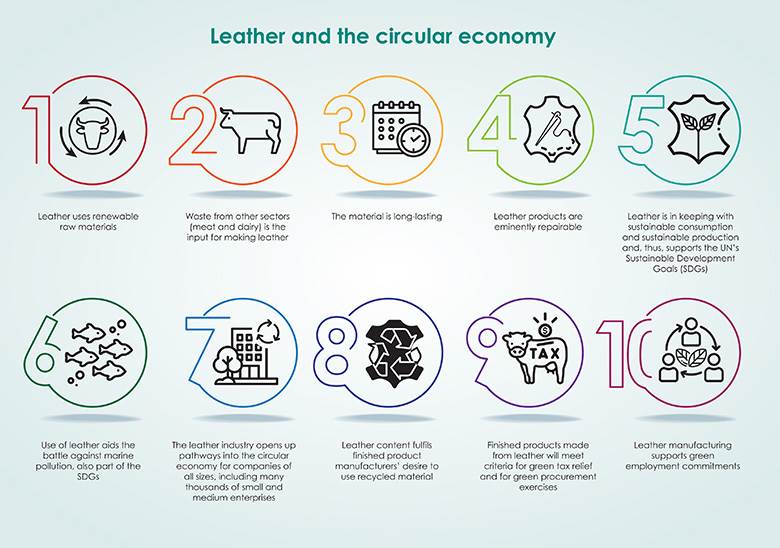
For centuries, wool and leather have been part of the lives of European rural communities, representing not only a productive and cultural tradition but also a resource closely linked to the land and to sustainable environmental management. Today, their value goes far beyond craftsmanship or historical heritage: these materials embody many of the characteristics required by the ecological transition and the new European circular economy. They are renewable and repairable resources, obtained as by-products of livestock systems and capable of transforming what would otherwise be considered waste into high-value materials.
Wool, in particular, represents one of the most interesting examples of a sustainable natural fibre. It grows naturally every year from sheep fleece, without requiring the petrochemical processes or industrial synthesis typical of artificial fibres. It is a renewable raw material that aligns with the principles of the bioeconomy and possesses properties difficult to replicate with synthetic materials. Wool is breathable, thermoregulating and insulating: it retains warmth in winter while helping moisture disperse during warmer periods, improving comfort without the need for additional chemical treatments. It is also naturally elastic, odour-resistant and flame-resistant, characteristics that reduce the need for intensive industrial processing and extend its lifespan.
Leather is also one of the most sustainable natural materials. Leather comes from a raw material already present in the food supply chain: using hides means valorising a livestock by-product that, without recovery and processing, would become waste requiring disposal, with additional environmental and energy costs. Tanning, therefore, transforms waste into a high-value resource, helping reduce waste and improve the overall efficiency of natural resource use. Leather is also an inherently biogenic material, meaning that its Carbon (C12) content is not fossil-based (biogenic), and it does not contribute to global warming. On the other hand, leather alternatives must use PU (polyurethane) binders to form a structured material, which rely on fossil carbon (C14) extracted from Earth’s Carbon reservoirs and contribute to global warming. This was shown in detail in an MDPI research, which is setting the basis for an upcoming European standard on carbon-typology quantification for leather. Leather alternatives have 40-100% fossil-carbon content, while leather’s fossil-carbon content depends on its coating and generally ranges from 0-15%.
Durability: a key element of sustainability
Durability is a key element in the sustainability of both wool and leather. A quality wool garment can last for many years while maintaining its performance. Natural leather also offers breathability, mechanical resistance, adaptability and the ability to age while retaining its value over time. Products such as shoes, bags, belts, jackets and furniture components can maintain their quality, functionality and aesthetics for many years, sometimes even decades. Unlike many low-cost synthetic materials, leather is resistant to wear, repairable and reusable for a very long time.
This longevity reduces the need for frequent product replacement and, consequently, the consumption of new raw materials, energy, and transport associated with industrial production. It also helps counter the logic of fast fashion by promoting more durable and sustainable consumption models. In an economic system still dominated by a disposable culture, the longevity of natural materials is becoming an increasingly strategic environmental asset.
Wool and leather beyond the clothing sector
Wool and leather can contribute to the circular economy far beyond the clothing sector. Today, wool is also used in sustainable construction as a natural insulating material, in gardening and agriculture, and even as a biodegradable alternative in certain technical materials. This further expands the valorisation potential of a fibre that, in many European regions, risks being underused or even disposed of as waste. Beyond shoes, bags and clothing, leather is widely used in furniture, automotive and nautical industries, as well as numerous technical products, thanks to its resistance, flexibility and long lifespan. In addition, waste generated by the tanning industry can be recovered and reused in several industrial processes, further reducing waste.
In recent years, innovative technologies have also been developed to valorise leather fibres and residues in the production of composite materials, organic fertilisers, agricultural biostimulants and construction products. The European tanning sector has invested significantly in environmental innovation, improving production processes to reduce water consumption, chemical use and emissions. In many European regions, tanneries now operate with advanced water treatment systems, energy recovery technologies and circular economy models, demonstrating how manufacturing tradition and sustainability can coexist.
Many “green” synthetic materials are still derived from plastics and fossil resources
Many people are unaware that several synthetic alternative materials marketed as “green” are actually derived from fossil resources and have a limited lifespan. Some quickly become waste, contributing to the growing problem of microplastic pollution and the management of non-biodegradable products. Leather, being of natural origin, is biodegradable, especially when compared to petroleum-derived synthetic alternatives that can remain in the environment for extremely long periods, sometimes decades or even centuries.
Many materials marketed as “vegan leather” or “eco leather” are in fact largely composed of plastics such as polyurethane or PVC, raising environmental concerns related both to their production and final disposal. At the end of its life cycle, wool also decomposes naturally in the soil within a relatively short period, releasing nutrients such as nitrogen, sulphur and keratin. Furthermore, during washing, wool does not release persistent microplastics into aquatic ecosystems.
A more accurate calculation method could reduce wool emissions to zero
Europe is currently developing new methodologies to assess the environmental footprint of products within sustainability and circular economy policies. However, some current approaches risk failing to adequately recognise the environmental benefits of natural materials such as wool and leather, potentially disadvantaging them relative to synthetic alternatives derived from fossil fuels. Recent research published in Agricultural Systems, which distinguishes between fossil and biogenic carbon, shows, for example, that the net emissions associated with wool can be reduced by 35% to 102%.
Valorising wool and leather means supporting a more circular and efficient European bioeconomy. At the same time, these supply chains support rural economies, biodiversity, and sustainable land management. To further explore these issues, wool and leather production will be at the centre of a meeting of the Sustainable Livestock Intergroup, bringing together policymakers and stakeholders to discuss the role of natural materials in future European sustainability policies and to promote fairer, science-based environmental assessment systems.