Red meat, processed meat and cancer risk (scientific evidence, interpretative limits and implications for food policy)
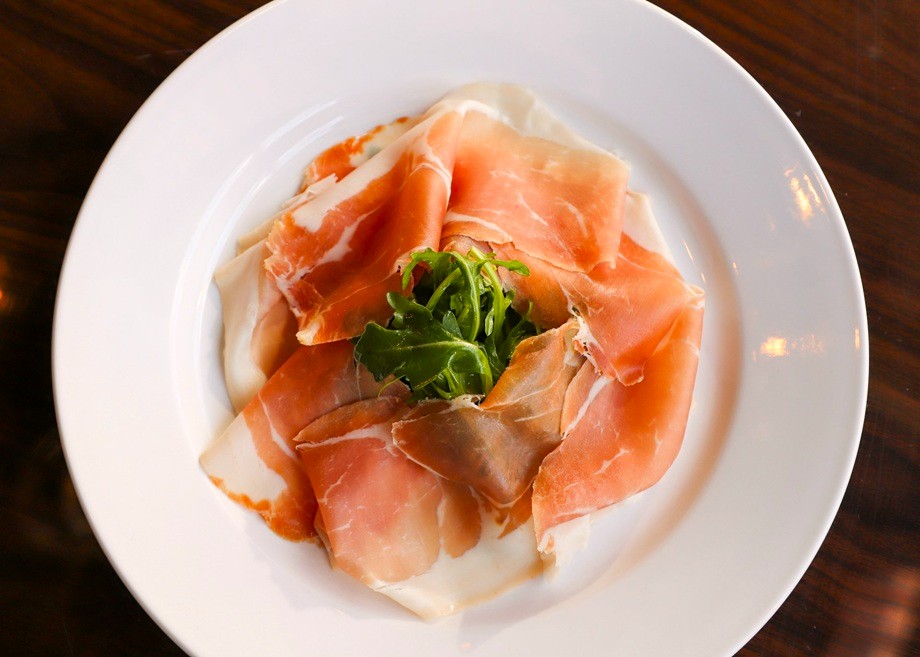
In a recent post on the Carni Sostenibili website, Professor Giuseppe Pulina of the University of Sassari in Italy writes, “The European Code Against Cancer‘s recommendation to limit red and processed meat, presented as a general rule and even accompanied by fiscal policy proposals, appears ideological and scientifically weak.”
Full article in English:
Here we go again: paraphrasing a well-known Italian proverb, we might say that “the devil hides among the saints.” This is precisely the case with the newly published European Code Against Cancer, 5th edition by the IARC, where, among the 14 guidelines for cancer prevention that are largely shared and broadly acceptable (the saints), the devil lurks in the recommendation to “limit the consumption of red meat and avoid the consumption of processed meat,” further aggravated by the suggestion to increase taxes on these foods, which are fundamental to our health.
Although this recommendation is presented in a prescriptive and concise form, thereby assuming the status of a general behavioural rule addressed to the entire population, its wording fails to specify either the degree of certainty of the underlying scientific evidence or the limits within which it can be considered well-founded.
I am well aware that the topic is complex and that the temptation to dismiss it as a déjà vu is strong. However, if you bear with us, we will once again demonstrate what we have been saying for many years: that meat (whether red or white, fresh or preserved using appropriate techniques) is not only not harmful, but is in fact beneficial to our health (and even to our mood, though that is another story).
The fact that meat is beneficial is an elementary truth grounded in evolutionary biology, human physiology, and nutrition science. Human beings evolved as omnivores, with foods of animal origin playing a central role in the development of the brain, musculature, and metabolism. The nutritional value of meat is high, in terms of protein density, amino acid quality, and the bioavailability of essential micronutrients such as heme iron, zinc, vitamin B12, and other factors that are difficult to replace with equal effectiveness through exclusively plant-based sources.
Why is meat viewed so negatively in the European debate?
The Carni Sostenibili website, together with the body of literature published over the years, provides a wide range of in-depth analyses addressing this crucial and unavoidable issue. It is therefore legitimate to ask how the European public debate has arrived at a narrative that portrays meat as a food to be drastically limited or even avoided altogether, especially when such guidance is included in cancer prevention documents. The European Code Against Cancer, we reiterate, calls on citizens to “limit the consumption of red meat and avoid the consumption of processed meat,” thereby implying a direct and generalised link between meat consumption and cancer risk. This wording, however, does not faithfully reflect the actual state of scientific knowledge. The assessments on which it is based primarily derive from the IARC Monograph published in 2018 and were reiterated in the WHO 2023 document, without any substantial update to the primary evidence. These are therefore the foundations that need to be examined, rather than slogans.
The first point to clarify is that there is no general association between meat consumption and “cancer” understood as a single, undifferentiated category. The epidemiological evidence, as acknowledged by the international agencies themselves, essentially concerns colorectal carcinoma, whereas for many other cancer sites, the associations are absent, inconsistent, or not statistically significant. This alone makes any generalised public message inappropriate.
The relationship between meat consumption and CRC risk is not statistically significant
The second point, which is even more relevant, is that, even in colorectal carcinoma, the evidence is far from unequivocal. The 2018 IARC Monograph, when read in its entirety rather than through selected excerpts, reports numerous prospective studies in which the relationship between meat consumption and CRC risk is not statistically significant. In some cases, points estimates are close to one; in others, they are even below one. In several studies, the association appears in one sex but not the other, or in one colon subsite but not others. This means that the very document on which the European recommendation is based contains null, inconsistent, or mutually incompatible results alongside an absolute prescriptive message.
A further element that is systematically neglected in public communication concerns the type of risk being reported. The estimates used by WHO and IARC are expressed as relative risks. An increase in relative risk, for example, 18% for an additional 50 grammes per day of processed meat, does not automatically translate into a high absolute risk. When this figure is related to the actual baseline risk in the population, the absolute increase is modest. The distinction between relative risk and absolute risk is not a technical detail, but the very foundation for assessing the proportionality of public health recommendations.
USA VS EU: different political translations of scientific uncertainty
An additional element must be added to this picture, one that is often overlooked in the European debate but becomes clear through international comparison. The new U.S. Dietary Guidelines, which we have discussed previously and which are based on a systematic review of the most recent literature, have explicitly acknowledged the absence of direct experimental evidence demonstrating a strong causal link between meat consumption, including processed meat, and major health outcomes. For this reason, the United States has not adopted exclusionary or prohibitive recommendations, but has instead chosen a proportional approach that prioritises unprocessed or minimally processed foods and places processed meats within a framework of occasional consumption, without demonisation.
This difference does not stem from different “science,” but from a different political translation of scientific uncertainty. Faced with weak, heterogeneous observational evidence that is highly sensitive to confounding, the U.S. approach has opted for methodological caution. The European approach, by contrast, has turned limited and often inconsistent epidemiological signals into strong prescriptive messages, going so far as to fuel proposals for meat taxation that are symbolically comparable to those applied to tobacco.
This is where the real crux of the problem emerges. Tobacco has no nutritional value and is causally and robustly associated with numerous diseases, with absolute risk (not relative risk) hundreds of times higher than that hypothetically attributed to meat consumption. Meat, by contrast, is a food of high nutritional density, an integral part of the human diet for hundreds of thousands of years, and its association with cancer risk is not demonstrated but, rather, remains controversial. Equating the two is not a scientific choice, but an ideological operation.
Saying that meat is good for health does not mean denying the complexity of nutrition or claiming that “more meat is always better.” It means acknowledging that there are no solid scientific grounds to demonise it, to attribute to it a strong causal role in cancer, or to justify punitive policies against it. The real challenge for public health is not to eliminate a nutritionally valuable food, but to improve overall dietary quality, reduce the excess consumption of ultra-processed foods (and not preserved foods such as Italian cured meats), and restore centrality to real foods, of both animal and plant origin, consumed in a balanced manner. On this ground, science does not justify bans or moral crusades. It justifies, rather, a rational, proportional, and ideology-free approach that recognises meat for the role it has always played in humankind’s biological and nutritional history.
Giuseppe Pulina