How to secure a sustainable future for the EU livestock sector in light of the need to ensure food security, farmers' resilience and the challenges posed by animal diseases?
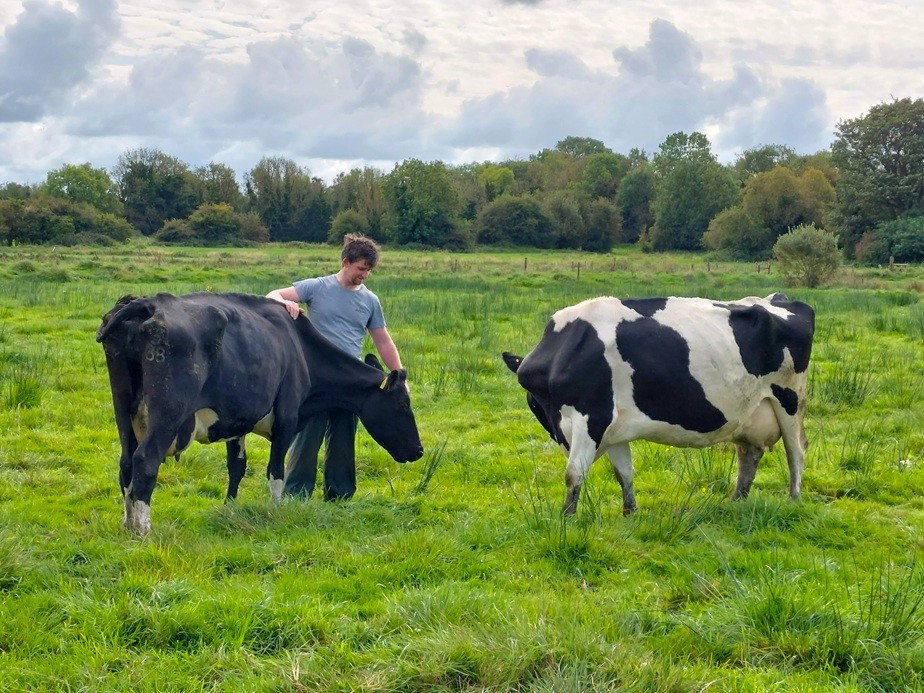
In recent years, the European livestock sector has become one of the most important battlegrounds in public debate: environment, health, economics, animal welfare, and food security are increasingly intertwined in complex ways. In this context, the Agriculture Committee of the European Parliament has approved a document (procedure 2025/2053 INI – own-initiative) on how to ensure a sustainable future for the livestock sector in the EU, outlining both the current situation and, above all, the political direction the Union should take. Key themes include the role of livestock in food security, the profitability and survival of farmers, the management of animal diseases, environmental and regulatory pressures, and the structural crisis affecting European agriculture. Let’s take a closer look.
A central sector, often underestimated
Livestock farming is far from being a marginal sector. It accounts for around 40% of the total value of European agricultural production and provides approximately 4 million jobs, particularly in rural areas. The European Union is also one of the world’s leading producers of meat and the largest producer of milk globally. This means that discussing livestock is not just about what we eat, but also about the economic balance of entire regions, land management, and the stability of food supply chains. It is therefore no surprise that the European Parliament starts from a very clear premise: without livestock farming, European food security would be at risk.
Despite its importance, the sector is under strain. Over the past decade, there has been a steady decline, with fewer animals, fewer farmers, and a lack of generational renewal. Many farmers are leaving the sector due to low profit margins, rising costs, increased regulatory pressure, and the declining appeal of the profession to younger generations. Added to this is a growing tension between production needs and societal expectations. Consumers are demanding higher animal welfare standards, lower environmental impact, and greater transparency. However, meeting these demands often entails additional costs that the market does not adequately compensate for.
Livestock and the environment: problem or opportunity?
On the one hand, the document clearly acknowledges that livestock farming contributes to emissions and therefore needs to evolve and improve. On the other hand, it also highlights the positive role the sector can play when managed properly. Grassland-based systems, for example, can help sequester carbon in soils; livestock farming can help maintain biodiversity and preserve landscapes that might otherwise be abandoned; manure is a valuable resource that can partially replace chemical fertilisers; and there is also potential to generate renewable energy through biogas.
The overall message is clear: livestock is not only an environmental problem; it can also be part of the solution, provided it is managed sustainably and responsibly. Moreover, it warns against overly simplistic approaches. A blanket reduction in animal numbers could actually produce the opposite of the intended effects, including rural abandonment, biodiversity loss, and increased wildfire risk. In other words, livestock should not be eliminated, but rather improved.
Nutrition: a clear position
Another key aspect of the document concerns the role of animal-based foods in the diet. The European Parliament emphasises that products such as meat, milk, and eggs still have significant nutritional value: they provide high-quality protein and supply vitamins and minerals that are often more difficult to obtain in adequate amounts from plant-based sources alone. This becomes especially important during certain life stages, such as childhood, pregnancy, and old age, when nutritional needs are more sensitive. At the same time, the document calls for a rigorous, evidence-based approach. It criticises the spread of oversimplified narratives unsupported by solid scientific data, particularly when alternative products are presented as perfect substitutes for animal-based foods. This does not mean dismissing different dietary patterns, but rather emphasising that food policies should be grounded in reliable scientific evidence and avoid ideological bias.
A particularly interesting section addresses new food technologies, such as cultivated (lab-grown) meat. The document does not reject them outright, but urges caution. There are still many uncertainties: insufficient evidence on their actual sustainability, unclear scalability at an industrial level, and uncertain consumer acceptance. In short, they are not currently seen as an immediate solution or a viable replacement for traditional livestock farming.
Animal diseases: the silent emergency
A very concrete, yet often overlooked, issue concerns animal diseases. Epidemics such as African Swine Fever or Avian Influenza can have devastating effects in a very short time: entire supply chains are disrupted, farms are decimated, trade comes to a halt, and extreme measures, such as mass culling, are often implemented. For this reason, the paper advocates a shift in approach. The idea is to move from emergency-driven management to a more preventive and structured strategy: strengthening farm biosecurity, investing more in vaccines, developing advanced monitoring systems, and improving coordination between EU countries.
The goal is clear: intervene before crises escalate, thereby reducing the need for drastic measures that entail enormous economic costs and significant social and ethical consequences. In this context, the document also addresses reducing antibiotic use, with an ambitious target to halve it by 2030. However, the paper emphasises that this process must be balanced: reduction, yes, but without compromising animal health and welfare. Once again, the point is not to simplify, but to find solutions that combine sustainability, health security, and continuity of production.
Protecting farmers’ income
Another key aspect of the document concerns the economic sustainability of the livestock sector, starting with a fact often overlooked: the sector’s strong dependence on public support. The Common Agricultural Policy (CAP) remains the main pillar supporting the income of many European farmers. Without this support, particularly in marginal and disadvantaged areas, many farms would not survive. For this reason, the European Parliament stresses the need to ensure continuity and stability of funding, complemented by more effective risk management tools, such as insurance schemes and compensation funds. The aim is to make the sector less vulnerable to crises arising from disease, climate, or market factors. Let us always remember, however, that the CAP is not a subsidy in itself, but the foundation of European food security.
Closely linked to this is the issue of international competition. European farmers operate under very high standards, both environmentally and in terms of food safety and animal welfare. However, these same requirements are not always imposed on imported products from non-EU countries, where regulations may be less strict. The result is often an unbalanced competition, leaving European producers at a disadvantage. For this reason, the document strongly calls for the principle of reciprocity: if Europe maintains high standards, imported products must meet equivalent rules. This leads to the call for stricter border controls and measures to protect European production, avoiding market distortions.
Technological innovation and consumer transparency
Innovation plays a central role in this transition. Importantly, the document does not call for radical revolution, but for practical, applicable innovation that improves the system without overturning it. Key areas include animal genetic improvement, the use of digital technologies, and the development of precision livestock farming, tools that can increase efficiency, better monitor animal health, and reduce waste. At the same time, it is clear about limits: it rejects “drastic changes” that would force a reduction in production, which could compromise food security and economic sustainability.
Another important theme is consumer transparency, particularly regarding labelling and product names. The Parliament has emphasised the need to protect the designations of animal-based foods, preventing their misuse for alternative products. The aim is straightforward: avoid confusion and ensure clear communication so that consumers can make informed choices.
A strategy without revolutions and no “one size fits all”
The message is strong and, in some ways, counterintuitive: livestock farming is not destined to disappear, but to transform. Not through ideological breaks or shortcuts, but via a gradual path, grounded in scientific evidence, economic sustainability, and respect for local realities. The document outlines a realistic, nuanced strategy grounded in the progressive evolution of the sector. The core idea is to improve what already exists: increase efficiency, reduce environmental impact, ensure economic stability for farmers, and integrate innovation with tradition. The future of European livestock will hinge on a delicate balance between often conflicting demands: producing enough food, reducing emissions, ensuring income for those working in the sector, and meeting increasingly high consumer expectations.
In this context, the European Parliament Agri Committee emphasises a fundamental point: there is no single solution that fits all. Europe is made up of very diverse territories in terms of climate, economy, and culture. Strategies must therefore be adapted locally, taking into account the specific characteristics of each region. At the same time, the document clearly reaffirms that animal production remains an essential part of the food system: it provides high-quality protein, as well as vitamins and nutrients that are not always readily available. This is even more relevant considering that global food demand is expected to grow through 2050. The real challenge in the coming years will not be choosing between production and the environment, or between tradition and innovation, but finding a way to combine all of these elements.