Can the EU livestock sector get the recognition and support it deserves for a sustainable transformation?
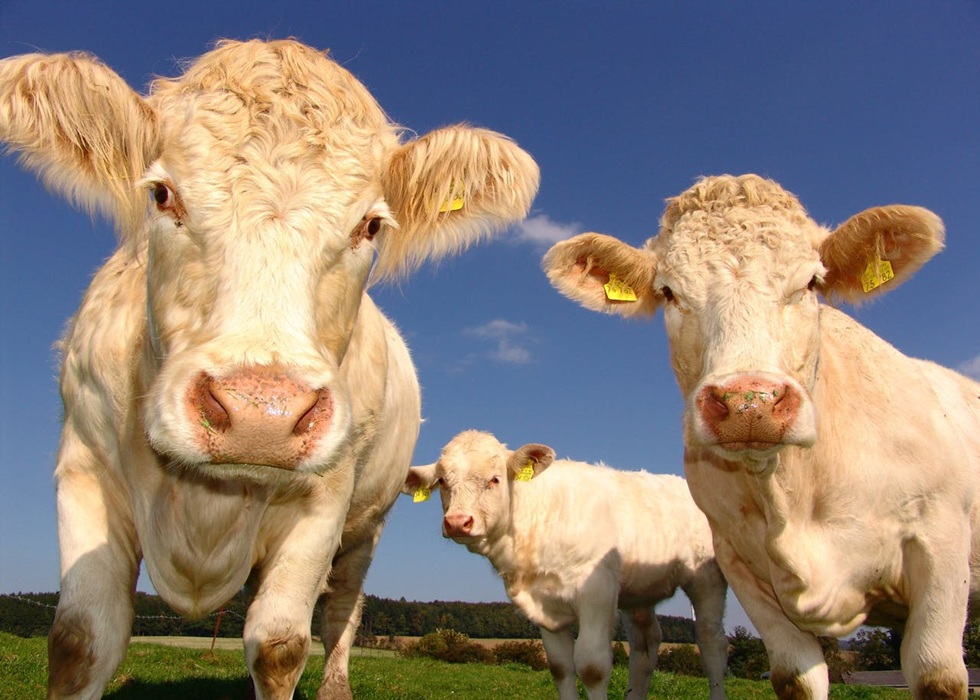
In recent years, European livestock farming has found itself at the centre of a profound transformation. On the one hand, farms must contend with growing challenges: market volatility, rising production costs, increasingly dominant international competition, higher environmental and climate expectations, new social sensitivities regarding biodiversity protection, animal welfare (here are nine facts you might not know about it), and, moreover, a regulatory framework that is often complex, layered, and difficult to manage.
Nevertheless, the livestock supply chain remains a strategic pillar of the European Union: it ensures food security, supports the economic sustainability of rural areas, jobs, and plays a central role in agri-food systems. The recently established Livestock Workstream is offering a new forum for discussion about the future of the sector, and this is a welcome initiative to the value chain. But there is still a lot of uncertainty for the sector, so numerous associations along the value chain came together to issue a Joint Call for an ambitious simplification agenda to support a sustainable future for livestock farming in Europe.
The EU Livestock Workstream
The EU Livestock Workstream is a new working pathway launched by the European Commission on 8 May 2025 within the broader Vision for Agriculture and Food. This new institutional space was created to address, in a shared manner, the present and future challenges of European livestock farming, thereby promoting direct and structured dialogue among farmers, supply-chain representatives, national governments, civil society, and, when necessary, academic experts.
The Workstream builds on two existing groups, the Civil Dialogue Group on Animal Production and the Expert Group on the Common Market Organisation, but expands their scope. Its goal is to envision a “future-proof” European livestock sector: more competitive, sustainable, fair, innovative, and capable of remaining an economic and food-production engine over the long term, fully equipped to face the future.
Its main functions are threefold: Exploring new policy directions to strengthen the sector in the long run, fostering open and constructive dialogue among all stakeholders involved, and deeply analysing the structural challenges the sector faces. In addition, the Workstream is intended to provide the Commission with valuable guidance in preparing legislative measures and initiatives.
A Joint Call for simplified rules
Published on 27 November 2025 by a coalition of 29 signatory associations, the “Joint Call for an ambitious simplification agenda to secure the future and competitiveness of the European Agri-Food chain” is a united appeal for an ambitious and cross-cutting reform of European regulations to reduce bureaucratic burdens, simplify procedures, and modernise outdated or no longer suitable rules.
It calls for a comprehensive legislative package that goes beyond agricultural policy (CAP) and covers all regulatory areas impacting the agri-food chain: agriculture, processing, the food industry, animal health, feed, agricultural cooperatives, supply-chain operators, and other actors involved in food production and distribution in Europe. The appeal is addressed to the European Commission, which is formalising an omnibus legislative package covering environment, food and feed production, processing, and distribution, which brings significant simplification and modern rules.
According to the signatory organisations, the European agri-food chain, which every day provides safe, high-quality, and nutritious food to millions of citizens, is currently under increasing pressure: from regulatory uncertainty and complex legislation to outdated rules that hinder innovation and a growing administrative burden. These obstacles risk slowing down the investments needed to improve the sustainability, productivity, and resilience of the European agri-food system.
The call insists that a merely “cosmetic” relief is not sufficient. Real and deep changes, enabling farmers, cooperatives, and food businesses to operate with certainty, invest in innovation and sustainable transition, and respond to market and global challenges, are needed urgently.
In a European context marked by geopolitical instability, global crises, climate change, and environmental challenges, ensuring a competitive, efficient, and resilient agri-food chain is essential both for food security and economic stability. Regulatory and bureaucratic simplification can unlock investments in innovation, environmental sustainability, and productivity, key elements for the sector’s ability to face future challenges. Providing regulatory certainty can make agricultural and agri-food activities more attractive, foster supply chain cooperation, and improve consumer trust, thereby strengthening the entire system.
The Joint Call sends a strong signal from actors across the agricultural and agri-food sectors with an open invitation to the European Commission to undertake genuine simplification of the rules governing the sector.
What does the future hold for the livestock sector?
The announcement of an EU Livestock Strategy due to be published in 2026, although a welcome idea, may be a bit pre-emptive as the Livestock Workstream has only met a few times, and the simplification process is ongoing. Associations along the value chain agree that this strategy should not be seen as an endpoint, but as a starting point: a roadmap.
There is a clear need to clearly identify and map the key challenges that must be addressed within this Commission’s mandate to strengthen the resilience, sustainability, and strategic autonomy of EU livestock sector. In today’s context, it is essential to move beyond broad principles and focus on practical solutions that deliver real change on the ground and a more sustainable future for everyone.