Dublin Declaration Desk: why scientific evidence should come first in the debate on meat and livestock
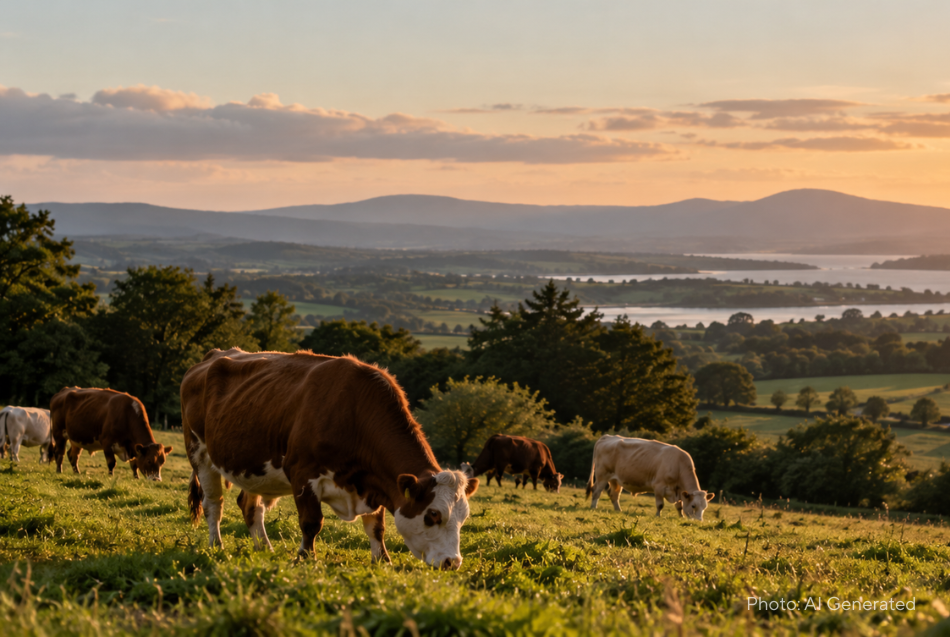
The Dublin Declaration Desk brings evidence-based science into the debate on meat, livestock, nutrition and sustainability. It looks beyond carbon alone, considering nutrition, biodiversity, land use, food security and farming communities.
The debate about meat and livestock is often reduced to opposing slogans: animal versus plant, meat versus climate, livestock versus the environment. But food systems are not built around a single variable, and neither is the science that studies them. This is the starting point of the Dublin Declaration Desk, a weekly publication launched by several co-initiators of the Dublin Declaration to bring scientific evidence on livestock, nutrition, the environment and society into a wider public discussion. The idea is straightforward: when decisions are made about food systems, the evidence should matter more than the identity of the scientist presenting it, the popularity of a particular argument or the ability of a message to go viral. The Dublin Declaration Desk publishes a new article every Thursday, written by scientists and researchers working across different disciplines and continents. Contributors include experts in medicine, food science, ecology, animal science, and agricultural economics.
Their approach is deliberately accessible: “based on science, but not as science”. In other words, the aim is not to turn scientific research into a series of technical papers, but to explain what the available evidence means for people making decisions about food, agriculture and society. The eight co-authors come from four continents and bring different areas of expertise to the discussion. Their voices will therefore vary from week to week. What they share is a commitment to looking at the evidence and discussing what it can and cannot tell us. The project also invites disagreement. Its comment sections are intended as a space where readers can bring data, corrections and perspectives from different countries and production systems. That approach is particularly relevant in a debate as complex as the future of meat and livestock.
When carbon becomes the whole story
One of the concepts explored by the Dublin Declaration Desk is what has been described as “Carbon Tunnel Vision“: the tendency to evaluate food sustainability primarily through greenhouse gas emissions while giving less attention to the other functions performed by food and farming systems. Greenhouse gas emissions clearly matter. Livestock production has an environmental footprint, and reducing that footprint remains an important challenge for the sector. But emissions are not the only measure of a food system. Nutrition matters. So do protein quality and micronutrient availability. Land use, biodiversity, soil health, water, food security, rural economies, and the ability to use resources that humans cannot eat directly also shape the picture. This changes the question being asked. Instead of simply asking how much carbon is associated with a particular food, the broader scientific question is how different foods and production systems can meet nutritional needs while reducing overall environmental pressures. That is a more complicated question. It is also much closer to the reality of food systems.
There is no single livestock system
Livestock production is not one single system. A precision-managed cattle farm, an extensive grazing system, a Mediterranean mixed farm, a pig unit and a poultry operation have very different characteristics. They operate in different climates and landscapes, use different resources and technologies, and interact with crops, soils and ecosystems in different ways. The same applies to feed. A significant share of livestock feed consists of materials that humans cannot directly consume, including certain by-products, residues and biomass from land that may not be suitable for growing food crops. Animals can therefore perform a function that is easily missed when food systems are assessed only by looking at the final product: they can convert otherwise unusable biological resources into nutrient-dense foods. This does not mean that every livestock system performs equally well or that environmental impacts should be ignored. It means comparisons need to be made at the whole-system level rather than through generalisations about “meat” or “animals”.
Following the evidence also means looking at uncertainty
Perhaps the most important issue raised by the Dublin Declaration Desk is not about meat itself, but about how science is used in decision-making. Scientific research rarely produces one simple answer that applies everywhere. It produces evidence with different levels of strength, different methodologies, uncertainties, conflicting results and important differences between populations, environments and production systems. That is particularly true for food. The impact of a food cannot always be assessed independently of the wider diet, the amount consumed, and the population’s nutritional needs. The same principle applies to environmental assessments: a production system may perform poorly on one indicator while providing benefits on another. This is why selecting only the studies that support a predetermined conclusion is not the same as following science. An evidence-based approach requires looking at the broader body of research, assessing methodological quality, acknowledging contradictory findings and distinguishing between what is well established and what remains uncertain. It is not always the easiest message to communicate. But it is essential when scientific evidence shapes public policy, investment decisions, or consumer choices.
Sustainability has more than one dimension
The food system of the future will have to balance several objectives at the same time. It will need to provide sufficient and nutritious food for a growing population, reduce environmental pressures, protect natural resources and biodiversity, and maintain economically viable farming communities. These objectives do not automatically point in the same direction. Improving livestock sustainability therefore means continuing to reduce emissions and improve resource efficiency, while also considering nutrition, land management, biodiversity, soil fertility, food security and the social and economic role of farming. The challenge is not to find one indicator that decides the entire debate. It is to understand how the different parts of the system interact. This is also why the launch of the Dublin Declaration Desk is significant. It creates another space where scientists can present evidence directly, while keeping the discussion open to challenge and new data.
What is the Dublin Declaration Desk?
The Dublin Declaration Desk is a weekly publication created by several co-initiators of the Dublin Declaration. It examines scientific evidence on livestock, nutrition, the environment, and society, and explains what that evidence may mean for decision-makers.
Why was the Dublin Declaration Desk created?
It was created to make scientific evidence more accessible and to encourage a debate about food systems that looks beyond individual headlines or isolated studies. The publication aims to connect research with the practical questions faced by policymakers, professionals and society.
What does “Carbon Tunnel Vision” mean?
“Carbon Tunnel Vision” describes an approach that evaluates food sustainability mainly through greenhouse gas emissions. The broader approach promoted by the Dublin Declaration Desk considers emissions alongside nutrition, land use, biodiversity, soil health, food security and the economic and social role of agriculture.
Why is it important to consider different livestock systems?
Livestock production varies substantially according to climate, geography, available land and water, feeding systems, technology and farm management. Because of these differences, the environmental and nutritional performance of livestock cannot be accurately represented by treating all production systems as if they were the same.