Denmark abolishes the Ministry of Agriculture: when ideology risks replacing science
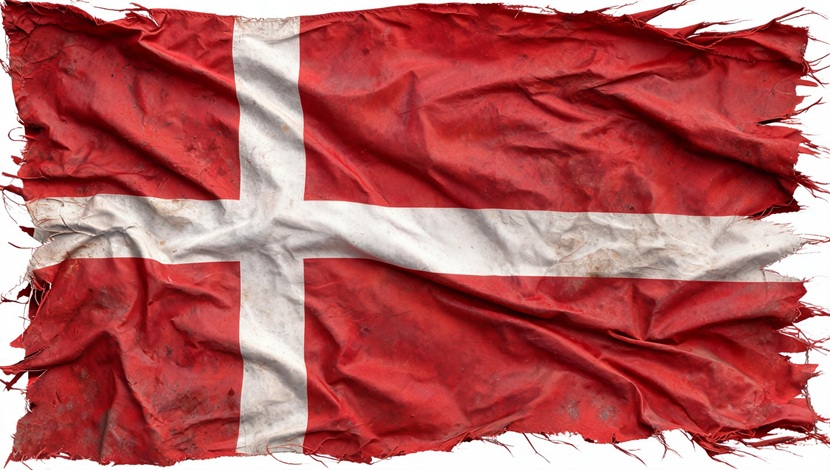
Denmark has become the first country in the European Union to eliminate the Ministry of Agriculture from its government structure. In its place, the Ministry of Nature and Animal Welfare has been created, a symbolic and political move that appears to prioritise an ideological vision over a science-based approach. This decision risks weakening agriculture and livestock farming, sectors that are fundamental to food production, rural economies, and food security.
Social Democratic Prime Minister Mette Frederiksen announced the decision as part of the formation of her new government, which took office following the March elections. The new ministry will be led by Christian Rabjerg Madsen, while the responsibilities traditionally assigned to the Ministry of Food, Agriculture, and Fisheries will be divided among five different ministries. This is the first time in Europe that a country has chosen to remove agriculture from its institutional framework, despite the sector’s strategic importance for the economy, food security, and national productive sovereignty.
The influence of Animal Protection Denmark on the government’s shift
The decision is particularly significant in Denmark, one of the leading players in European agri-food production. The country is the world’s sixth-largest pork exporter and boasts one of Europe’s most efficient and technologically advanced livestock sectors. Yet intensive livestock farming has been at the centre of criticism from environmental and animal welfare groups, which have increasingly influenced national politics in recent years.
It is therefore no surprise that one of the strongest supporters of the reform is Animal Protection Denmark. This organisation has long campaigned to reduce the role of livestock farming within the Danish food system. Its CEO, Britta Riis, described the creation of the new ministry as a “historic victory“, arguing that agricultural and food industry interests have traditionally taken precedence over animal welfare.
As a result, the debate risks becoming increasingly dominated by an ideological narrative that views livestock farming as a problem to be reduced rather than as a sector that can be improved through innovation, scientific research, and technological progress.
A decision that undermines one of Europe’s most advanced livestock systems
Over recent decades, European livestock farming has made remarkable progress in production efficiency, emissions reduction per unit of output, animal health management, and animal welfare standards. Denmark itself has often been cited as one of the most advanced countries in applied agricultural research and in its ability to combine economic competitiveness with environmental sustainability.
For this reason, it seems paradoxical that Copenhagen has now symbolically downgraded the role of agriculture within its institutions. Danish Member of the European Parliament Asger Christensen did not hesitate to call the reform “a disaster“, warning that when responsibilities are divided among multiple ministries, there is a real risk that no one will maintain a comprehensive vision of food policy.
The appointment of Maria Reumert Gjerding as Minister for the Environment further reinforces the perception of a government increasingly aligned with environmental activism in its approach to agricultural issues. Gjerding currently serves as President of the Danish Society for Nature Conservation and comes directly from the environmental movement.
The decision also follows Denmark’s introduction in 2024 of the world’s first tax on agricultural emissions. This measure had already raised significant concerns among farmers and industry stakeholders who feared it would undermine competitiveness without delivering tangible environmental benefits.
Weakening livestock farming means failing future generations
When politics replaces the language of science with that of ideology, there is a risk of losing sight of a fundamental principle: environmental sustainability cannot exist without productive sustainability, just as food security cannot exist without a strong, modern, and competitive agricultural sector.
The abolition of Denmark’s Ministry of Agriculture signals a political vision that increasingly views agriculture and livestock farming as part of the problem rather than part of the solution. If the green transition ceases to be driven by innovation and scientific evidence and instead becomes an ideological campaign against animal production, the risk is not only to weaken Europe’s livestock sector but also to compromise the continent’s ability to provide food, employment, and economic development for future generations.
The real challenge is not to reduce agriculture and livestock farming, but to make both increasingly efficient and sustainable. Forgetting this means putting one of the pillars of European food security at risk.