Circular feed and feed additives: what role can they play in emission reductions from livestock?
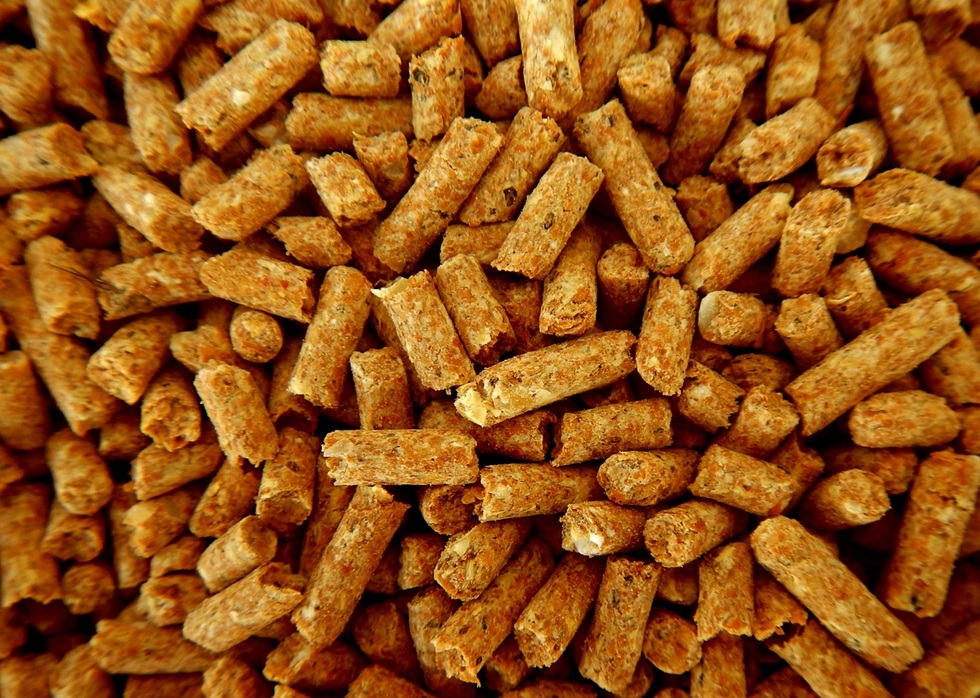
Reducing greenhouse gas emissions in the livestock sector is now one of the main challenges facing European agriculture. The objective of decarbonisation does not concern only ruminants, often at the centre of the debate because of methane emissions from enteric fermentation, but also the farming of monogastric animals, such as pigs and poultry. In these production systems, in fact, the largest share of the climate impact does not come from the animals’ digestion, but rather from the production, sourcing, processing and transport of animal feed. For this reason, addressing the main factors that determine the overall carbon footprint of livestock systems is a priority to promote decarbonisation.
The formulation of animal feed represents one of the most effective levers for reducing the overall carbon footprint of the livestock supply chain. In particular, two strategies are increasingly taking a central role in this process: the use of circular feed ingredients and the targeted use of nutritional feed additives. Let’s take a closer look.
Circular feed: upcycling nutrients through livestock
Reducing the impact of raw materials used in animal feed, such as soy, corn or other cereals, means rethinking the origin, composition and nutritional efficiency of feed to optimise the use of agricultural land, fertilisers and processing energy, while also avoiding long international transport chains. This is where the use of by-products and residues from the food and non-food industry as feed ingredients becomes one of the key principles of the circular economy applied to livestock farming. An example of these circular feed materials is former foodstuffs, which include unsold bread, biscuits, and off-spec bakery products, non-marketable pasta and breakfast cereals, and other processing residues from the food industry.
These are foods that, for logistical or commercial reasons, can no longer be destined for human consumption but still retain high nutritional value. Through processes of collection, sorting and processing, these products can be converted into highly digestible feed ingredients. The environmental advantage is clear: instead of producing new crops specifically for animal feed, existing resources are reused, reducing the consumption of land, water and energy. In this way, CO₂ emissions associated with feed production are reduced while preventing food waste. This approach also helps close resource loops between the food industry and livestock farming, creating more efficient and sustainable supply chains. A greater use of circular feed ingredients, therefore, represents a key strategy in this context, as it enables the valorisation of resources that are not specifically cultivated for animal feed.
Feed additives: improving nutritional efficiency
Alongside the circular use of raw materials, another important strategy involves the use of nutritional feed additives designed to improve the efficiency of animal nutrition. Many additives work by making nutrients more digestible and more readily absorbed, allowing animals to utilise better what they eat. Among the most commonly used are enzymes, which improve the digestion of proteins and fibres; phytases, which increase the availability of phosphorus in plant-based feeds; synthetic amino acids, which make it possible to reduce the overall protein content of diets; and probiotics and prebiotics, which improve the balance of the intestinal microbiota.
Thanks to these tools, it is possible to formulate more precise and balanced feeds, reducing nutritional excesses. This has a direct effect on environmental emissions: lower protein surpluses in the diet mean lower nitrogen excretion, which would otherwise be converted into ammonia or nitrogen oxides. Similarly, improved phosphorus availability reduces the amount of this element released in manure. In other words, feed additives enable animals to produce more with fewer resources, improving the overall efficiency of the system.
The importance of accurate data to reduce the impact of feed ingredients
To properly guide these innovations, it is essential to have accurate data on the environmental impacts of feed ingredients. Improving data development is a crucial first step to reliably identify the main pressure points and, subsequently, enable innovation in feed formulation to reduce the carbon footprint. Through analytical tools such as Life Cycle Assessment (LCA), it is possible to calculate the climate footprint of different raw materials and identify those with the greatest impact. Accurate datasets enable animal nutritionists to develop formulations optimised not only from a nutritional perspective but also from an environmental perspective, selecting ingredients with a lower carbon footprint.
The integration of circular feed ingredients, innovative additives and advanced environmental assessment systems represents a concrete strategy to reduce emissions in monogastric livestock farming. This is not a single solution but rather a set of tools that act at different levels of the supply chain. These approaches make it possible to reduce dependence on feed-dedicated crops, valorise food by-products, improve the nutritional efficiency of animals, lower nitrogen and phosphorus emissions, and reduce the carbon footprint of animal production.
In a European context increasingly focused on the decarbonisation of agriculture, innovation in feed formulation represents one of the most promising pathways to reconcile livestock productivity and environmental sustainability. The 30 April session of the Sustainable Livestock Intergroup will provide further insights into these issues and present the main drivers and practical examples for reducing carbon emissions in livestock farming through more sustainable feed formulations.
If you want to participate or follow the event online, register here.