Broiler Chickens and Transport: More Space Doesn't Improve Animal Welfare
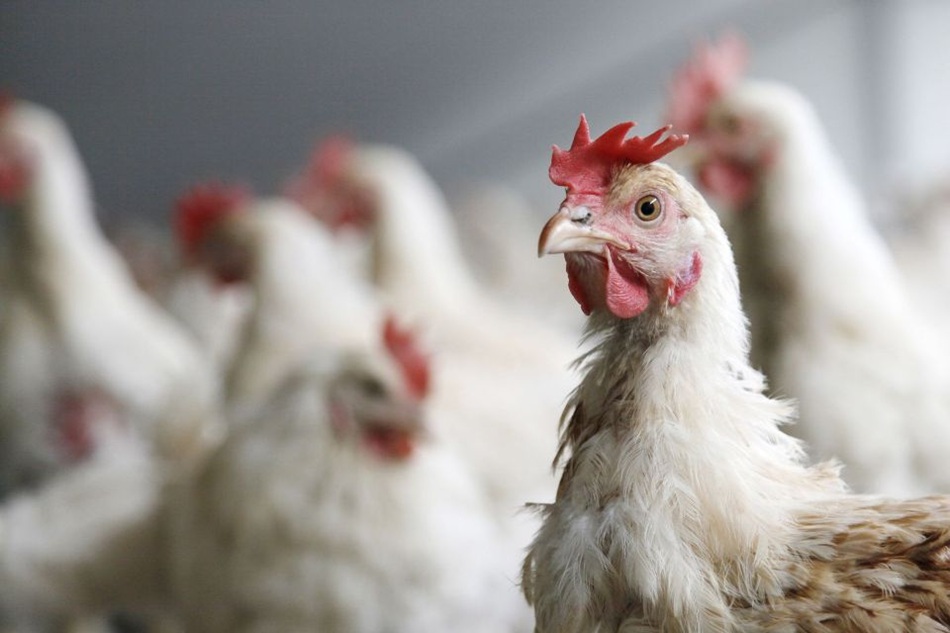
When we talk about animal welfare, the first thing that usually comes to mind is space. Most people instinctively think that giving chickens more room to movewill automatically make them less stressed, healthier, and less prone to injuries. It’s a simple and intuitive idea: more space equals better welfare. This same reasoning has also shaped the latest European guidelines on the transport of broiler chickens. But, as is often the case, the reality is more complex than it seems. In practice, having more space doesn’t necessarily translate into better welfare.
Unexpected findings from the Hungarian study: more space can actually create more problems
Transport conditions can significantly impact broiler welfare, meat quality, and farm economics. Recently, the European Food Safety Authority (EFSA) recommended providing broiler chickens with more space during transport to improve their welfare. However, a new study conducted on a Hungarian farm tested this recommendation and came to an unexpected conclusion: with more space available, welfare problems actually increased.
The study compared the standard EU crate density with the lower density suggested by EFSA, statistically assessing the effects of reduced loading density under commercial Hungarian conditions. In total, 176,198 heavy-weight Ross 308 broilers were transported over a short distance of 19 km under moderate spring temperatures (7–13°C) using 33 trucks. The control trucks followed the EU-regulated density (160 cm²/kg; 5,610 birds per truck), while the test trucks applied the reduced density recommended by EFSA (200–210 cm²/kg; 4,334 birds per truck).
Surprisingly, the broilers transported with more space, that is, at a lower crate density, showed worse outcomes, including higher mortality, more injuries, and greater carcass rejection rates at the delivery. Significant differences were observed between the two experimental groups. The low-density group recorded higher rates of dead-on-arrival birds (+69%), more wing injuries (+61%), more bruising (+98%), and a greater percentage of rejected carcasses (+38%).
The higher incidence of injuries and mortality in the low-density group may be explained by increased bird mobility within the crates. The additional space likely encouraged more wing flapping, movement, and collisions during vehicle motion, leading to mechanical injuries.
These results suggest that increasing available space during transport does not improve welfare and may, on the contrary, raise the risk of injuries, , with negative economic and environmental consequences for the poultry sector.
Previous studies reach the same conclusions
The results of the present study confirm and statistically reinforce the conclusions of a previous Hungarian study, which examined the transport of heavy broilers on two farms and reached similar findings. Based on that earlier research, the authors suggested that transporting birds with less space per bird actually reduces bruising, as closer body contact helps stabilise the birds, lowers the risk of falls, and limits the need for movement to maintain balance.
The findings of the current study hence indicate that the EFSA recommendation to increase space per bird during transport does not improve key welfare indicators under moderate temperature conditions. This suggests that a generalised requirement for more space per animal in all transport scenarios may not universally enhance welfare and, under certain environmental conditions, could even be counterproductive.
Evidence from studies conducted in Canada, South Korea, Pakistan, and Belgium supports this interpretation, showing that higher loading densities can actually be beneficial, particularly under colder conditions. Therefore, the optimal transport density depends on the season and requires a careful balance between thermal stress and available space to preserve both meat quality and animal welfare.
Overall, these findings highlight the importance of adapting regulatory frameworks to specific climatic and production contexts, rather than applying uniform stocking density requirements across all circumstances.
Fewer birds per journey: higher environmental impact and increasing economic costs
In the Hungarian study, the “low-density” group transported about 1,300 fewer birds per truck, corresponding to a 23% reduction in capacity compared to the standard. From an economic standpoint, adopting the EFSA-recommended density triggered a cascade of effects: transporting the same number of birds requires an additional nine trips, leading to higher fuel consumption, increased labour and operational costs, and a larger environmental footprint. At the same time, the higher mortality and carcass-rejection rates observed at lower densities result in measurable economic losses, further undermining the system’s sustainability. According to the study’s estimates, a 23% reduction in stocking density can reduce transport profitability by more than 12% per kilogram of meat if a genuine improvement in animal welfare does not accompany it.
On the environmental side, reducing density also comes at a high cost. If each truck must make multiple trips over the same route, diesel consumption and CO₂ emissions increase proportionally. In the Hungarian case, the increase in trips led to a 28% rise in fuel use and emissions. On a European scale, where millions of broilers are transported each week, the cumulative impact would be enormous: more fuel, more traffic, and higher emissions, in direct conflict with the Green Deal’s climate footprint reduction targets.
Animal welfare involves much more than just the amount of space available
The lesson is clear: animal welfare cannot be reduced to a matter of square centimetres. Thus, a measure intended to help animals can end up causing more harm, higher costs, and increased emissions, without delivering tangible benefits. It is therefore recommended that these findings be taken into account by the European Commission and policymakers involved in drafting animal welfare legislation.
To truly improve transport conditions, a more comprehensive approach is needed: one that considers temperature, ventilation, journey duration, animal weight, load stability, and staff training and outcome based indicators. Only by integrating all of these factors can meaningful results be achieved for animals, farmers, and the environment. Conducting comparable large-scale studies across multiple European regions would help build a complete climatic and operational model, providing valuable guidance for future policies on animal welfare in poultry transport.