EU Soil Directive: Pastures and ruminants are essential
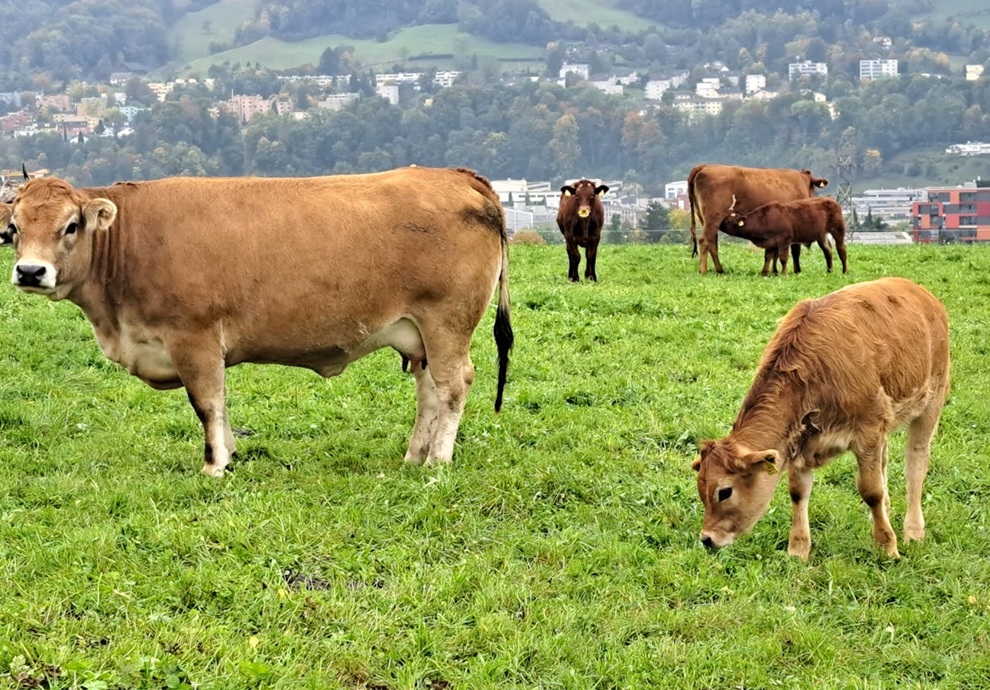
Why the new European directive on soil, which is already degraded in 70% of cases today, directly concerns agriculture, pastures, and ruminants.
With Directive (EU) 2025/2360 of November 12 on Soil Monitoring and Resilience, the European Union is introducing for the first time a comprehensive regulatory framework dedicated to soil health as a strategic resource for the economy, the environment, and food security. The directive’s premise is clear in considering soil a limited resource, non-renewable on a human timescale, and warning that its degradation—already estimated at between 60% and 70% of European soils—represents a direct threat to Europe‘s capacity to produce food, manage water, mitigate climate change, and maintain biodiversity.
Almost all food depends on soil
Although not formally an agricultural directive, the text has a deeply agricultural structure. Soil health is indeed defined in relation to its ability to provide essential ecosystem services, including the production of safe and high-quality food, nutrient cycling in ecosystems, water retention and infiltration, carbon storage, and support for biodiversity. The directive explicitly recalls that almost all food depends, directly or indirectly, on soil, and that its degradation compromises not only yields but also the economic stability and resilience of the entire European agri-food system.
The importance and centrality of pastures
In this framework, the role of pastures is central, even if not always explicitly named. The directive includes pastures within the categories of agricultural and semi-natural land use, and repeatedly references natural herbaceous formations, soil organic matter, biodiversity, and organic carbon as key indicators of the health of soil substrates—all elements that find one of their most coherent and stable expressions in permanent pastures.
Pastures, in fact, contribute structurally to the physical protection of soil, the reduction of erosion and compaction, the improvement of structure and water retention capacity, as well as the accumulation of organic carbon. These are precisely the functions that the directive identifies as decisive for resilience to climate change, drought, and extreme events.
The strategic role of ruminant supply chains
It is at this point that ruminant supply chains take on a strategic role. If pasture can be considered a true ecological infrastructure for soil, ruminant farming represents its management safeguard, since the directive clarifies that land degradation is not an inevitable fate but the result of management choices.
In this sense, livestock systems based on grazing help maintain soil biological cycles, return organic matter to the soil, support microbial biodiversity, and prevent the abandonment and artificialisation of rural areas. These are not side effects but central functions in relation to the directive’s stated objectives.
A particularly relevant aspect concerns the climate. The directive recognises soil as the planet’s second-largest carbon reservoir, and agricultural practices are identified as one of the main tools for strengthening its role as a carbon sink. In this context, properly managed pastures and ruminant supply chains—which prevent their abandonment—represent the primary lever within soil protection policies and climate adaptation.
Soil: an asset to monitor, protect, and enhance
Read from the perspective of pastures and their users—ruminants—the new soil directive therefore marks a paradigm shift. Soil is no longer merely the physical support for agricultural production but becomes an asset to monitor, protect, and enhance.
Grazing-based livestock practices, such as cow-calf systems and extensive milk production from small and large ruminants, when well managed, fully contribute to the defence of the territory, fertility, and the resilience of rural ecosystems. For sustainable ruminant supply chains, this means being able to claim an active and structural role in European strategies for soil, climate, and food security.
By Professor Giuseppe Pulina, President Emeritus of the Association for Science and Animal Production (ASPA), Full Professor of Ethics and Sustainability of Farming at the Department of Agriculture of the University of Sassari, and President of the Carni Sostenibili (Sustainable Meats) Association.
Source: Carni Sostenibili (ELV Italy)